
In the semiconductor manufacturing process, many key materials and components determine process stability and product yield. Although semiconductor graphite fixtures do not receive as much attention as wafers or targets, they consistently play a vital role in high-temperature processing, epitaxial growth, annealing, and compound semiconductor manufacturing.
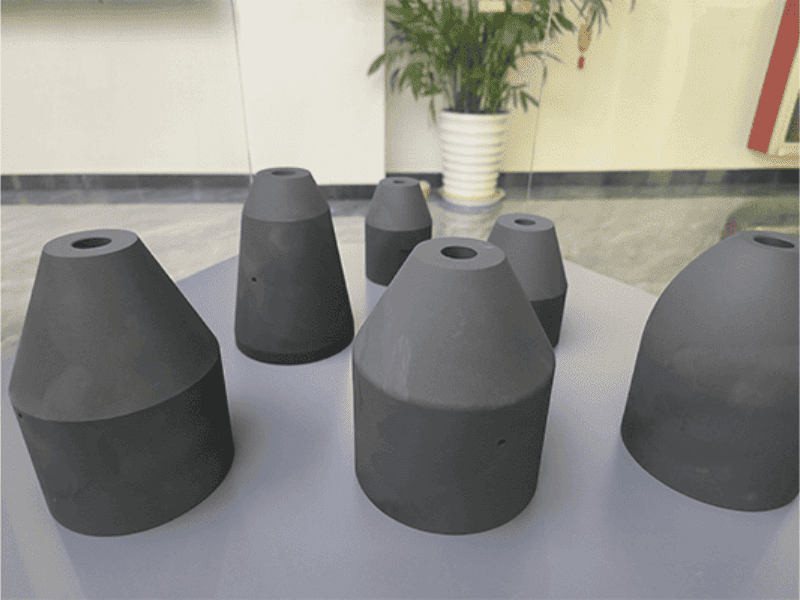
Simply put, semiconductor graphite fixtures are functional components used in high-temperature process equipment, primarily responsible for tasks such as load-bearing, support, positioning, and heat transfer. They are typically made of high-purity graphite, and surface coatings such as SiC can be applied according to process requirements to enhance high-temperature resistance, oxidation resistance, and corrosion resistance.
Graphite is widely used in the semiconductor industry primarily due to several outstanding material advantages. First, graphite exhibits excellent stability at high temperatures and can withstand harsh thermal processing conditions. Second, its thermal conductivity and thermal shock resistance help maintain consistent temperature distribution. Additionally, graphite offers good machinability, enabling it to meet the demands of complex structures and high-precision dimensional requirements.
In practical applications, graphite fixtures are commonly used in epitaxy, diffusion, annealing, and compound semiconductor-related processes. Particularly in the manufacturing of wide-bandgap semiconductors such as SiC and GaN, where process temperatures are higher and environments are more complex, higher demands are placed on the purity, structural stability, and surface treatment capabilities of graphite fixtures.
Beyond the material’s inherent properties, the machining precision and consistency of graphite fixtures are equally critical. For semiconductor equipment, fixtures serve not only as support components but also directly impact the uniformity of heat distribution and positioning stability during the manufacturing process. Inadequate dimensional control or subpar surface treatment often compromises process repeatability and may even lead to particle contamination and increased maintenance costs.
As the semiconductor industry continues to advance toward more sophisticated processes, market demands for graphite fixtures are also rising. Beyond high purity and high density, low particulate content, low contamination, dimensional consistency, and extended service life are becoming key criteria for evaluating product quality. This signifies that graphite fixtures are no longer merely auxiliary components but have become critical elements that directly influence process performance.
Looking at industry trends, future high-performance graphite fixtures will place greater emphasis on the integration of material upgrades and surface protection technologies. Particularly against the backdrop of rapid advancements in wide-bandgap semiconductors, high-temperature epitaxy, and precision thermal processes, graphite fixtures with higher cleanliness, greater durability, and more consistent batch performance will play an increasingly vital role in the semiconductor supply chain.
Overall, semiconductor graphite fixtures play an irreplaceable foundational role in semiconductor manufacturing. In the future, as demand for wide-bandgap semiconductors and high-temperature processes continues to grow, high-performance graphite fixtures will also find broader applications.
Post time: Mar-30-2026