
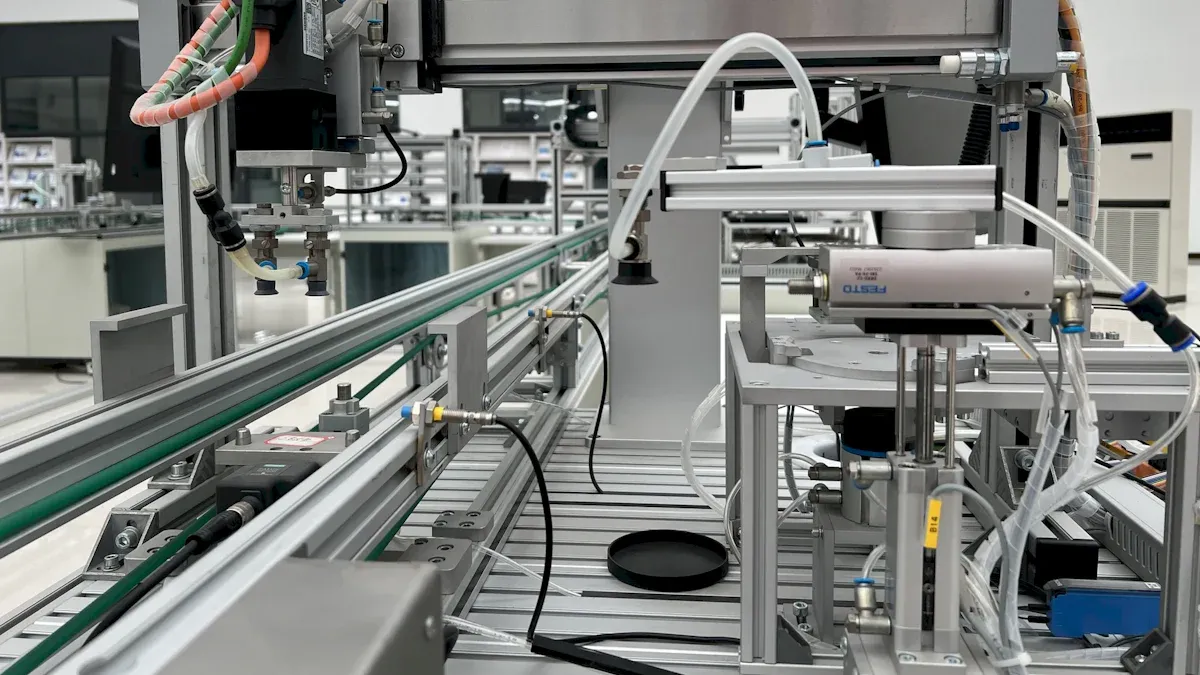
Purchasing MOCVD Epitaxial Parts requires careful consideration. Critical factors include product quality, cost-effectiveness, and establishing reliable supplier relationships. Companies must balance these elements to ensure operational efficiency. Making informed purchasing decisions for MOCVD components is essential for long-term success. This guide assists in navigating these complex choices.
Key Takeaways
- Good MOCVD parts need careful checking. This means looking at quality, cost, and who you buy from.
- Always check the quality of MOCVD parts. Make sure they meet exact rules and pass all tests.
- Think about the total cost of MOCVD parts. This includes more than just the price tag. It covers upkeep and how long they last.
- Choose your MOCVD parts suppliers wisely. Pick companies that offer good support and have a strong history.
- Stay updated on new MOCVD technologies. This helps you buy the best and newest parts.
Ensuring Quality Control for MOCVD Epitaxial Parts
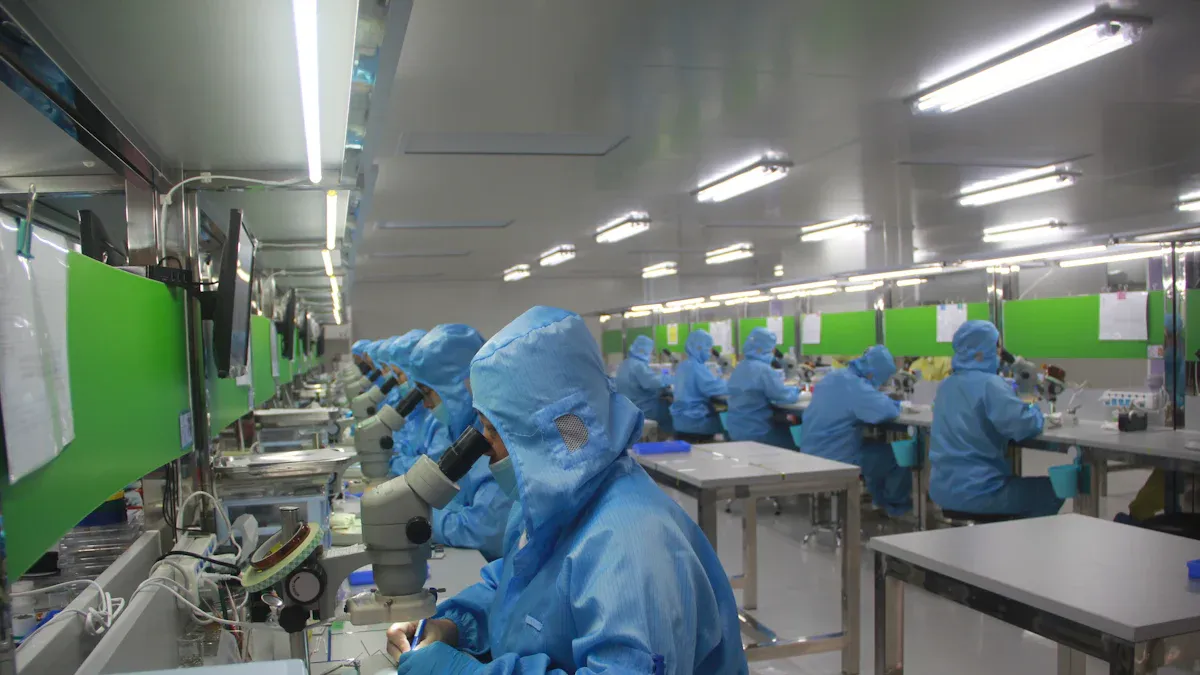
Quality control forms the bedrock of successful MOCVD operations. Rigorous attention to detail ensures the reliability and performance of critical components. Companies must establish comprehensive strategies to maintain high standards throughout the procurement process.
Defining MOCVD Epitaxial Parts Specifications
Clear and precise specifications are crucial for MOCVD Epitaxial Parts. These specifications detail material composition, dimensional tolerances, surface finish, and purity levels. Buyers must work closely with engineers and production teams to establish these parameters. Well-defined specifications prevent misunderstandings and ensure suppliers deliver components meeting exact operational requirements. This proactive approach minimizes defects and optimizes process efficiency.
Implementing Robust Testing Protocols for MOCVD Parts
Effective quality control requires robust testing protocols. These protocols verify the integrity and performance of MOCVD parts before integration. Non-destructive testing methods play a vital role in this process. For instance, Cathodoluminescence Spectroscopy (CL) offers non-destructive evaluation of AlGaN/GaN HEMT structures grown by MOCVD. It assesses individual layers through emission intensities and peak positions. Other techniques, such as Photoluminescence (PL), X-ray Photoelectron Spectroscopy (XPS), Angle Resolved X-ray Photoelectron Spectroscopy (ARXPS), and Secondary Ion Mass Spectrometry (SIMS), further substantiate CL findings. These advanced testing procedures ensure components meet stringent quality benchmarks.
Verifying Certifications and Compliance for MOCVD Components
Verifying certifications and compliance is essential for MOCVD components. Suppliers must demonstrate adherence to recognized quality management systems. Many reputable manufacturers, including Ningbo VET Energy Technology Co., Ltd., achieve ISO 9001:2015 certification for their quality management systems. This certification confirms a commitment to consistent quality. Other relevant certifications include ISO 14001 for environmental management, ISO 13485 for medical devices, ISO 27001 for information security, ISO 45001 for occupational health and safety, and IATF 16949 for automotive quality. Furthermore, regulatory compliance is critical. Stringent environmental and safety regulations, particularly in Europe and North America, govern the handling of precursor gases and waste disposal. These regulations influence equipment design and operational protocols, driving investments in eco-friendly and energy-efficient epitaxial solutions.
Assessing Performance and Reliability of MOCVD Epitaxial Parts
Evaluating the performance and reliability of MOCVD components is paramount for sustained operational success. This assessment goes beyond initial quality checks. It involves understanding how parts behave under real-world operating conditions over time. Engineers must predict potential failure points and degradation mechanisms. This proactive approach ensures the longevity and efficiency of the entire MOCVD system. A component’s ability to consistently perform its function without failure directly impacts production yields and overall equipment uptime.
Typical failure modes for MOCVD epitaxial parts often stem from material imperfections and operational stresses. Understanding these failure mechanisms is crucial for selecting robust components.
- Threading dislocations frequently arise from heteroepitaxy. This occurs due to the lack of perfectly matched substrates. These dislocations are a primary cause of leakage currents and trapping effects within devices.
- These structural defects also negatively impact the overall reliability of the device. They can lead to premature device failure or degraded performance.
- Operating bias conditions significantly influence device reliability. They affect the peak temperature’s value and location. This, in turn, alters the type and rate of thermally induced degradation. This is particularly true at critical areas, such as the drain side corner of the gate. Such thermal stresses accelerate material fatigue and component wear.
Therefore, comprehensive performance assessment includes rigorous stress testing and accelerated life testing. These tests simulate extended operational periods. They help identify vulnerabilities before they lead to costly downtime. Manufacturers must provide data on mean time between failures (MTBF) and expected lifespan. Buyers use this information to make informed decisions. They consider the component’s resilience to thermal cycling, chemical exposure, and mechanical stress. A thorough understanding of performance characteristics ensures the selected MOCVD Epitaxial Parts meet demanding production requirements. This ultimately contributes to higher yields, reduced maintenance costs, and a more stable manufacturing process. This detailed evaluation minimizes risks associated with component failure.
Achieving Cost-Effectiveness in MOCVD Epitaxial Parts Procurement
Cost-effectiveness is a critical consideration for MOCVD operations. It involves more than just the initial purchase price. Companies must adopt a holistic view of expenses to optimize their procurement strategies.
Analyzing Total Cost of Ownership for MOCVD Parts
Analyzing the total cost of ownership (TCO) for MOCVD parts provides a comprehensive financial picture. TCO extends beyond the upfront purchase price. It includes installation costs, operational expenses, maintenance, and potential downtime. Buyers must consider energy consumption, labor for replacement, and the cost of lost production due to component failure. A thorough TCO analysis helps identify hidden costs and allows for more accurate budgeting. This approach ensures that purchasing decisions support long-term financial health.
Strategies for Price Negotiation of MOCVD Epitaxial Parts
Effective price negotiation is vital for achieving cost-effectiveness. Buyers can employ several strategies to secure favorable terms. Establishing strong relationships with suppliers often leads to better pricing. Companies can also leverage their purchasing power. Multi-year contracts and volume commitments are common contractual terms that significantly impact pricing. These agreements provide suppliers with predictable demand, allowing them to offer reduced unit costs. Buyers should always seek competitive bids from multiple vendors. This ensures they receive the best possible value for their MOCVD Epitaxial Parts.
Evaluating Long-Term Value of MOCVD Components
Evaluating the long-term value of MOCVD components is essential for sustainable operations. This assessment considers how a component performs over its entire lifecycle. Key metrics for evaluation include:
- Durability: The component’s ability to withstand operational conditions over time.
- Thermal Stability: The component’s capacity to maintain its properties under varying temperature extremes.
- Compliance with Industry Standards: Adherence to established benchmarks for quality and performance.
- Long-term ROI: The financial return on investment considering the component’s lifespan and efficiency.
- Scalability: The supplier’s capability to meet increased demand and adapt to future wafer sizes.
- Regulatory Compliance: Conformance to evolving environmental and safety regulations.
- Innovation Capability: The vendor’s investment in research and development for material improvement and sustainability.
- Total Cost of Ownership: Encompasses maintenance, replacement, and operational efficiencies throughout the component’s lifecycle.
Vendor verification also requires detailed technical datasheets, certifications, and case studies to demonstrate performance. Supply chain analysis involves assessing supplier resilience through sourcing strategies, inventory levels, and contingency plans. These factors collectively determine a component’s true long-term value.
Managing Inventory and Lead Times for MOCVD Epitaxial Parts
Effective inventory management and careful consideration of lead times are crucial for uninterrupted MOCVD operations. Companies must balance the need for readily available components with the costs of holding excess stock. Poor planning can lead to production delays and increased expenses. Therefore, strategic approaches to stock levels and delivery schedules are essential.
Lead times for custom components can vary significantly. Alliance MOCVD LLC. suggests using open purchase orders to avoid unexpected part lead times, highlighting the importance of proactive planning. III-V Epi, a UK-based company, achieves shorter lead times than the industry standard for MOCVD, III-V, epitaxial structures by focusing on low to medium volume manufacturing. Similarly, Masimo Semiconductor prioritizes providing the fastest turnaround times possible for custom III-V epitaxial services, recognizing the importance of speed to market. For standard components, Semicera offers a 30-day lead time for CVD SiC & TaC Coating, which includes some MOCVD components. These examples show the diverse lead time landscape.
Companies implement several strategies to manage inventory and lead times effectively:
- Forecasting Demand: Accurate prediction of future component needs helps optimize stock levels.
- Safety Stock: Maintaining a buffer of critical parts prevents disruptions from unexpected demand or supply issues.
- Supplier Relationships: Strong relationships with vendors can lead to more flexible delivery schedules and better communication regarding potential delays.
- Just-in-Time (JIT) Inventory: This approach minimizes holding costs by receiving materials only as needed for production. However, it requires highly reliable suppliers and robust logistics.
- Consignment Inventory: Suppliers store parts at the buyer’s facility, and the buyer pays only when they use the parts.
These strategies help ensure a steady supply of necessary components while minimizing inventory costs and mitigating risks associated with extended lead times.
Comprehensive Supplier Evaluation for MOCVD Epitaxial Parts

Effective supplier evaluation is paramount for securing high-quality components and ensuring operational continuity. Companies must implement a structured approach to assess potential partners. This process minimizes risks and fosters reliable supply chains.
Establishing Selection Criteria for MOCVD Parts Suppliers
Companies must define clear selection criteria for MOCVD parts suppliers. These criteria guide the evaluation process. Key factors include a supplier’s quality management systems, production capabilities, and financial stability. Buyers also assess a supplier’s technical expertise and their ability to meet specific material and dimensional requirements for MOCVD Epitaxial Parts. A supplier’s track record for on-time delivery and adherence to specifications also holds significant weight. Establishing these benchmarks ensures alignment with internal quality standards and production demands.
Conducting Supplier Audits for MOCVD Epitaxial Parts
Supplier audits provide an in-depth look at a vendor’s operations. These audits typically involve on-site visits to manufacturing facilities. Auditors review production processes, quality control procedures, and documentation. They verify compliance with industry standards and internal specifications. Audits also assess a supplier’s capacity to handle production volumes and their contingency plans for disruptions. This rigorous examination helps confirm a supplier’s capability and commitment to quality.
Assessing Technical Support and Service for MOCVD Components
The quality of technical support and service significantly impacts operational efficiency. Companies need suppliers who offer prompt and knowledgeable assistance. This includes quick response times for technical inquiries and effective troubleshooting. San’an Vice Chairman, Kechuang Lin, highlighted the benefits of working with Amec, a China-based MOCVD supplier. He noted their "fast response times from the company’s field support teams." This close proximity to Amec’s rich process expertise proved invaluable. Reliable technical support minimizes downtime and ensures smooth integration of MOCVD components.
Building Strong Supplier Relationships for MOCVD Epitaxial Parts
Building strong relationships with suppliers is crucial for successful MOCVD operations. These partnerships extend beyond simple transactions, fostering open communication and mutual trust. Suppliers become an integral part of the procurement team, offering insights and solutions. This close collaboration leads to more effective problem-solving, especially when facing unexpected challenges. It also ensures greater flexibility in meeting evolving production demands and adapting to new technologies. Long-term relationships often result in preferred service, including faster lead times and more favorable pricing structures. Companies benefit from a deeper understanding of their specific material and technical needs, leading to customized solutions. This proactive approach helps maintain a stable and resilient supply chain, minimizing disruptions. It also supports continuous improvement in component quality and innovation, driving overall efficiency. A strong bond with suppliers ensures consistent support and reliability, which are vital for high-tech manufacturing.
Reviewing Supplier Track Record and References for MOCVD Parts
Thoroughly reviewing a supplier’s track record is essential before making purchasing commitments. Companies must examine past performance data comprehensively. This includes evaluating on-time delivery rates, product quality consistency, and responsiveness to technical or logistical issues. Consistent quality and reliability are key indicators of a dependable partner. Buyers should actively request and contact references from other customers who have experience with the supplier’s MOCVD parts. Speaking directly with these references provides invaluable, real-world insights into a supplier’s operational efficiency, technical support capabilities, and problem-solving approach. A strong track record demonstrates a supplier’s unwavering commitment to excellence and customer satisfaction over time. This due diligence helps validate their stated capabilities and overall reliability. It minimizes procurement risks and ensures the selection of truly dependable partners for critical MOCVD components, safeguarding production continuity and quality.
Navigating Challenges in MOCVD Epitaxial Parts Purchasing
Purchasing MOCVD components presents unique challenges. Buyers must address customization needs, mitigate supply chain risks, and understand warranty procedures. Proactive strategies help overcome these hurdles.
Addressing Customization Needs for MOCVD Components
Many MOCVD systems require specialized components. Customization often becomes necessary to meet specific process requirements. However, this process introduces complexities. Companies face the challenge of adding functionality and processing power without increasing cost. They must also avoid dramatically changing the system design or compromising reliability. New components must retain the deposition recipes of legacy systems. Customers invest significant time and resources defining these processes. They require new systems to maintain them precisely without unplanned downtime. This ensures consistent production quality.
Mitigating Supply Chain Risks for MOCVD Epitaxial Parts
Supply chain disruptions pose significant threats to MOCVD operations. Companies must develop robust strategies to minimize these risks. Strategic planning and investment in research and development are crucial. Fostering supply chain resilience is essential. Continuous process innovation can improve yields and reduce costs. Diversifying supply chains helps mitigate risks. Maintaining regulatory compliance is important. Adopting flexible manufacturing models can reduce operational risks. Streamlining manufacturing processes can reduce costs and lead times. Establishing local supply chains also reduces costs and lead times. Developing robust risk-mitigation frameworks is necessary to navigate regulatory and tariff uncertainties. Exploring regional manufacturing hubs can further safeguard against disruptions.
Handling Warranty and Returns for MOCVD Parts
Understanding warranty terms and return policies is vital for MOCVD parts. Clear procedures protect buyers from defective or incorrect shipments. Generally, returns are not accepted after 14 days from receipt. Valid reasons for return include defective items, missing items, or items not accurately described. Returned items must be in the same condition as they were shipped to qualify for a refund. Customers should contact the seller immediately if problems arise with an item. They must refrain from attempting repairs or investigations. The warranty becomes void if any item is tampered with, opened, or disassembled. Upon receiving a purchase, it is crucial to photograph, document, and save all packaging. This applies regardless of visible damage. All claims must be reported and acknowledged within 72 hours of receipt.
Staying Updated on Industry Standards for MOCVD Epitaxial Parts
Staying current with industry standards and emerging technologies is crucial for purchasing MOCVD components. The landscape of epitaxial growth evolves rapidly. Buyers must understand the latest requirements and innovations. This knowledge ensures the procurement of future-proof and compliant equipment.
MOCVD equipment operates within strict guidelines. Cleanroom environments and precise control systems are essential to meet industry standards. Compliance with regulations like SEMI standards and environmental guidelines is mandatory. Manufacturers increasingly incorporate automation and data tracking. This ensures consistency and traceability, especially in regulated sectors like aerospace and healthcare. Buyers must verify compatibility with relevant regulatory and quality standards for their specific industry.
The field also sees continuous technological advancements. Real-time process monitoring systems now feature in-situ metrology. These systems analyze epitaxial layer thickness and uniformity during deposition. This is critical for SiC and GaN power devices. Hybrid epitaxy technologies combine MOCVD and MBE. They create complex multilayer device structures for optoelectronics, RF, and high-frequency applications. Multi-wafer batch reactors are optimized for larger wafer diameters, such as 200mm and 300mm. This scales production efficiently. AI-enhanced deposition control systems offer predictive adjustments and self-correcting processes. This reduces operational downtime. Low-pressure and high-vacuum reactors reduce gas consumption and promote clean manufacturing. Emerging epitaxy-on-insulator (EoI) and vertical epitaxy are paving the way for next-generation logic devices, memory chips, and quantum computing hardware.
New materials also drive innovation. Silicon carbide (SiC) and gallium nitride (GaN) substrates are vital for EV inverters and 5G telecom components. Indium phosphide (InP) is crucial for photonics and 5G applications. Equipment designs reflect these changes. Large-chamber, multi-wafer designs, like 8-inch SiC epitaxial equipment, enhance production capacity and improve uniformity. Smart manufacturing and process optimization use AI for real-time monitoring of gas flow and temperature. This minimizes material waste. The industry shifts from LED dominance to high-end applications like SiC and GaN. This requires specialized equipment. Long-term growth areas include perovskite photovoltaics and quantum dots, pending material and process breakthroughs.
Successful procurement of MOCVD Epitaxial Parts requires careful attention to quality control, cost-effectiveness, and thorough supplier evaluation. Strategic purchasing decisions are crucial for operational efficiency and long-term success. Companies must diligently select MOCVD components, ensuring they meet stringent requirements and contribute to robust manufacturing processes. Informed choices lead to reliable performance and optimized production. This guide empowers buyers to make intelligent and diligent MOCVD parts selections.
FAQ
What are the primary considerations when purchasing MOCVD epitaxial parts?
Buyers must balance quality control, cost-effectiveness, and reliable supplier relationships. These factors ensure operational efficiency and long-term success for MOCVD processes.
How do companies ensure the quality of MOCVD epitaxial parts?
Companies define precise specifications, implement robust testing protocols, and verify certifications like ISO 9001. They also assess performance and reliability under operational conditions.
What does "Total Cost of Ownership" mean for MOCVD parts?
Total Cost of Ownership (TCO) includes the initial purchase price, installation, operational expenses, maintenance, and potential downtime. It provides a comprehensive financial view beyond just the upfront cost.
Why is building strong supplier relationships important for MOCVD parts?
Strong supplier relationships foster open communication and mutual trust. They lead to effective problem-solving, flexible delivery, and customized solutions, ensuring a stable and resilient supply chain.
How can buyers mitigate supply chain risks for MOCVD epitaxial parts?
Buyers diversify supply chains, maintain regulatory compliance, and adopt flexible manufacturing models. They also establish local supply chains and robust risk-mitigation frameworks.
Post time: Nov-17-2025