
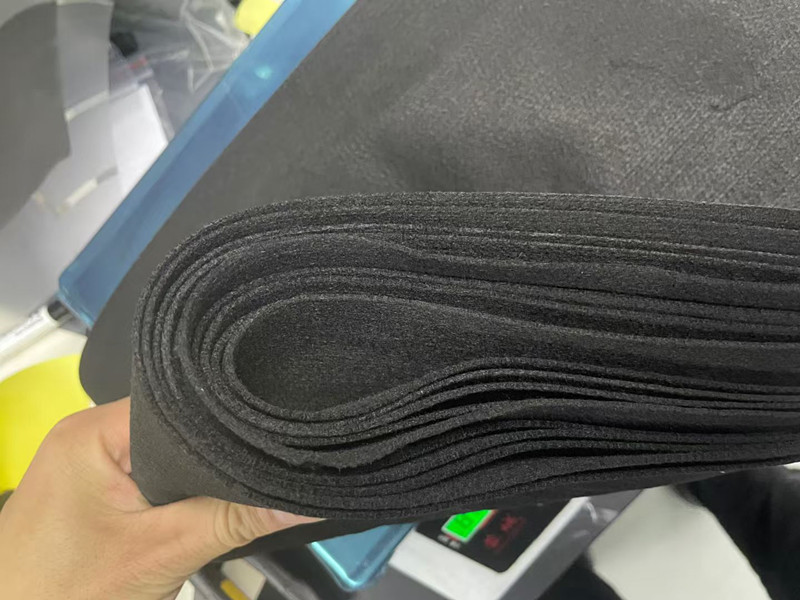
Graphite electrode felt is a porous, high-temperature resistant carbon-based material widely used in electrochemical applications, especially in energy storage and conversion systems such as redox flow batteries, fuel cells, and electrolytic reactors. It is manufactured by carbonizing and graphitizing fibrous precursors (typically PAN-based or rayon-based felts), forming a three-dimensional network of carbon fibers with excellent electrical conductivity and chemical stability.
1. Structure and Composition
Graphite electrode felt is composed of thousands of fine carbon fibers intertwined into a non-woven mat. After carbonization (typically above 1000 °C) and graphitization (usually above 2000 °C), the material gains:
- High electrical conductivity
- Corrosion resistance in acidic or alkaline media
- Thermal stability above 3000 °C in inert environments
It retains a soft, compressible structure but becomes chemically inert and electrically active.
2. Why Use Felt in Electrodes?
Unlike solid graphite plates, graphite felt provides a large internal surface area and enhanced ion diffusion, making it ideal for electrochemical reactions that benefit from high mass transfer efficiency. Its open-pore structure allows electrolyte to penetrate deeply, enabling redox reactions throughout the volume—not just at the surface.
Key advantages:
- High surface area: Suitable for high-current-density applications
- Good electrical connectivity: Maintains current flow across compressed layers
- Customizable thickness and density: Tuned for specific stack designs
- Lightweight and flexible: Easy to handle and fabricate
- Thermal resilience: Performs under elevated temperatures
3. Typical Applications
Graphite electrode felt is extensively used in:
Redox Flow Batteries (VRFB, IRFB, etc.)
Its large surface area supports the V²⁺/V³⁺ and VO²⁺/VO₂⁺ redox couples efficiently. High durability and conductivity make it ideal for long-cycle performance.
Fuel Cells
In some fuel cell architectures, graphite felt acts as a porous gas diffusion electrode or catalyst carrier.
Electrolyzers / Electrochemical Reactors
Felt electrodes are used in various electrochemical processes such as wastewater treatment, electro-synthesis, and hydrogen production.
Laboratory Research
Due to its flexibility, low cost, and easy processing, graphite felt is widely used in prototype testing and bench-scale experiments.
4. Selection Parameters
When selecting graphite felt for an electrode, several factors must be considered:
|
Property |
Description |
| Thickness | Commonly 3–12 mm, depending on system design |
| Bulk Density | Affects compressibility and porosity |
| Porosity | Typically above 90%; higher porosity = higher electrolyte penetration |
| Resistivity | Through-plane and in-plane values matter for current distribution |
| Thermal Stability | Especially important in high-temperature or regenerative systems |
| Wettability | Determines how quickly the electrolyte spreads inside the felt |
| Surface Activation | Treated surfaces improve reaction kinetics and hydrophilicity |
5. Common Modifications
While untreated graphite felt performs well, surface modification often enhances electrochemical performance:
- Thermal activation: Introduces oxygen-containing groups to improve wettability
- Chemical oxidation or plasma treatment: Adds active sites and enhances reaction rates
- Catalyst loading: Metal oxides (e.g., MnO₂, Pt, Ir) can be added to improve specific reactions
- Graphene/nanocarbon coating: Improves conductivity and mechanical integrity
6. Key Considerations in Practical Use
- Compression: Felt behavior changes under pressure; conductivity and flow resistance must be balanced
- Purity: High-purity felts are required in sensitive systems to avoid contamination
- Handling: Must avoid oil, dust, or metal particle contamination; protective gloves and dust-free environments recommended
- Pre-treatment: Washing or pre-conditioning may be needed depending on electrolyte compatibility
Graphite electrode felt is not just a material—it’s a high-performance electrochemical component. Its combination of conductivity, porosity, flexibility, and chemical resistance makes it a preferred choice in advanced battery stacks, electrolyzers, and lab-scale energy conversion systems.
Whether you’re designing a next-gen redox flow battery or testing new catalyst interactions in a fuel cell prototype, graphite felt offers a tunable, scalable platform for efficient electrochemical operation.
Post time: Dec-16-2025