
Graphite susceptor cracking and corrosion primarily result from thermal stress, chemical reactions with process gases, and material impurities. Preventing these defects involves optimizing material selection, process parameters, and maintenance practices. Proactive defect analysis and prevention significantly extend the lifespan of a graphite susceptor. This approach also reduces downtime and ensures consistent process quality.
Key Takeaways
- Graphite susceptors crack from sudden temperature changes, material flaws, or rough handling. Proper care and material choice prevent these issues.
- Corrosion in graphite susceptors happens due to chemical reactions with gases or impurities. Special coatings and clean gases protect them.
- Combining the right materials, careful handling, and protective coatings helps graphite susceptors last longer. This also makes industrial processes work better.
Understanding Graphite Susceptor Defects
What is a Graphite Susceptor?
A graphite susceptor is a critical component in high-temperature industrial processes. It supports and heats substrates or wafers during various manufacturing stages. Industries widely use these components in applications requiring extreme thermal stability and chemical resistance. For instance, in epitaxy and MOCVD, graphite equipment supports substrates during thin film deposition. These processes involve high temperatures, high vacuum, and aggressive gaseous precursors, demanding zero contamination. The semiconductor industry also utilizes graphite electrodes and protective screens in ion implantation to modify substrate composition. SiC-coated graphite susceptors are core components in MOCVD equipment, supporting and heating single-crystal substrates. Their quality directly impacts the uniformity and purity of film materials. Other applications include silicon epitaxy, crystal growing processes, plasma etching, and LED chip production.
Identifying Cracking in Graphite Susceptors
Cracking represents a common issue in graphite susceptors. Prolonged exposure to extreme temperatures and reactive environments often causes this defect. Regular inspections are crucial for identifying structural weaknesses. Visual inspection helps detect surface irregularities like cracks, bubbles, or uneven thickness. These visible signs indicate potential structural integrity issues. For a more detailed analysis, microscopic examination reveals finer details. This technique can uncover micro-cracks or inconsistencies within the material structure that are not visible to the naked eye.
Identifying Corrosion in Graphite Susceptors
Corrosion in graphite susceptors manifests as material degradation due to chemical reactions. Visual indicators often include surface pitting, erosion, and discoloration. The susceptor’s surface may appear rough or uneven, indicating material loss. Changes in color can also signal chemical alteration of the graphite. In severe cases, the susceptor’s shape or dimensions may visibly change, compromising its functionality and structural integrity. These signs point to chemical attack from process gases or contaminants.
Root Causes of Graphite Susceptor Cracking
Thermal Stress and Cycling
Rapid temperature fluctuations significantly contribute to cracking in graphite susceptors. These components often experience extreme heating and cooling cycles during operation. Such cycles induce thermal stress within the material. When the material expands and contracts unevenly, it creates internal forces that can lead to crack initiation and propagation. For instance, Tantalum Carbide (TaC) coating significantly improves the thermal shock resistance of graphite crucibles. This coating minimizes the risk of cracking or structural failure during rapid temperature changes. It maintains structural integrity during sudden heating or cooling cycles, preventing surface cracks and erosion under extreme thermal conditions. Ablation tests showed the TaC coating remained intact with negligible erosion and no surface cracks after 120 seconds under an oxyacetylene flame. Similarly, silicon carbide demonstrates stability during repeatable heating and cooling cycles. Over 25 heating/cooling cycles, it maintained an average peak temperature of 329 ± 55 °C, with analysis showing no significant losses in thermal conductivity or permittivity.
Material Properties and Manufacturing Defects
The inherent properties of the graphite material and any defects introduced during manufacturing also play a crucial role in cracking. Graphite’s anisotropic nature means its properties vary with direction, making it susceptible to stress concentrations. Material impurities, voids, or inconsistent density can act as stress risers. These imperfections become weak points where cracks can easily form under thermal or mechanical load. Poor quality control during the production process can exacerbate these issues, leading to a susceptor with compromised structural integrity from the outset.
Mechanical Stress and Handling
External mechanical forces also cause cracking. Improper handling during installation, removal, or routine maintenance can introduce significant stress. Accidental impacts, dropping, or applying uneven pressure can create micro-fractures that later develop into larger cracks. The design of the system itself can also contribute; inadequate support or clamping mechanisms can place undue mechanical strain on the graphite susceptor during operation, leading to premature failure.
Root Causes of Graphite Susceptor Corrosion
Chemical Reactions with Process Gases
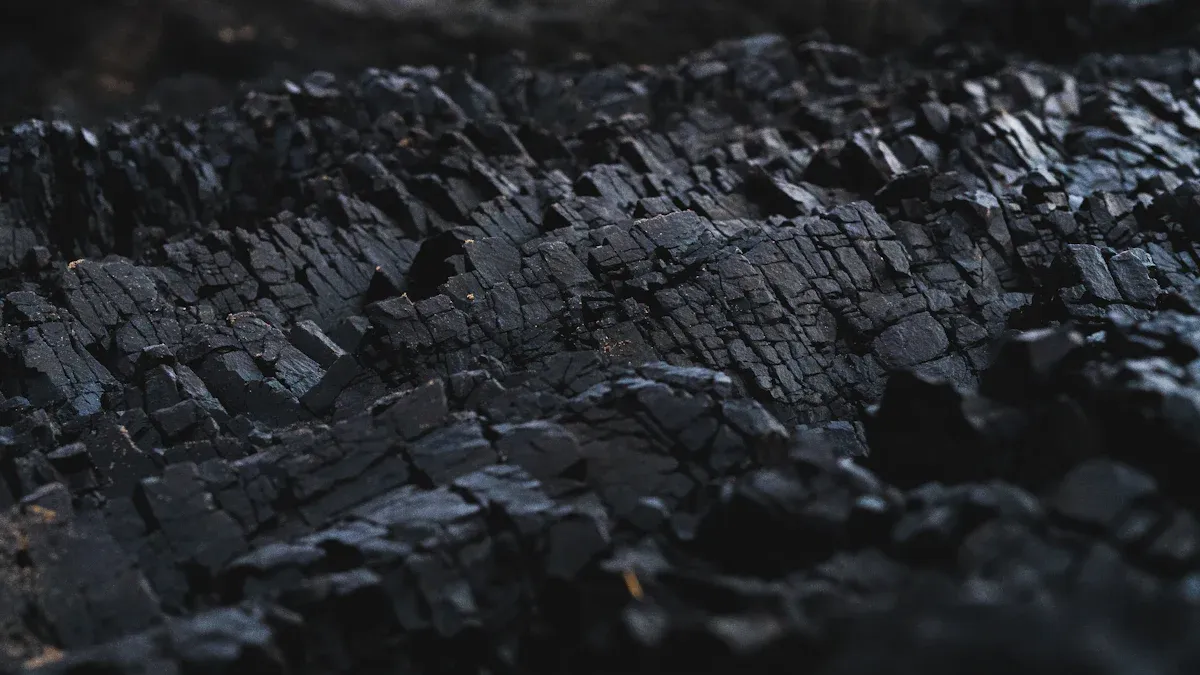
Graphite susceptors possess extremely stable chemical properties. They exhibit good resistance to most corrosive gases and chemical reagents. However, specific process gases can initiate corrosive reactions. For instance, ammonia (NH3) and chlorine (Cl2) are known to react with graphite at elevated temperatures. These reactions degrade the material over time. Furthermore, graphite susceptors react with hydrogen at high temperatures, up to 2100 K. This reaction forms various hydrocarbon species. This process is particularly relevant in applications like chemical vapor deposition (CVD) of α-silicon carbide. Here, the susceptor itself can generate hydrocarbons, influencing the gas phase composition in the growth region.
Contamination and Impurities
Contamination and impurities significantly accelerate corrosion in graphite susceptors. Metal impurities can accelerate the oxidation of graphite at elevated temperatures. This leads to increased erosion of components. Trace impurities in graphite susceptors accelerate corrosion by acting as catalytic centers. Specifically, metallic impurities such as Na, K, Ca, Al, and Ti are not uniformly distributed. They tend to segregate within the porosities of the graphite matrix or appear as discrete point inclusions. When these impurities reside on the walls of these porosities, they significantly accelerate the oxidation of the graphite. This catalytic effect reduces the oxidation resistance of the material.
Temperature and Pressure Effects
Temperature and pressure play critical roles in the rate and extent of corrosion. Higher temperatures generally increase the kinetic energy of reactant molecules. This accelerates chemical reactions between process gases and the graphite susceptor material. Elevated temperatures can also alter the material’s microstructure, making it more susceptible to chemical attack. Similarly, specific pressure conditions can influence the concentration of reactive gases at the susceptor surface. This directly impacts the corrosion rate. Optimal temperature and pressure control are essential to mitigate these corrosive effects.
Preventing Cracking in Graphite Susceptors
Optimizing Thermal Management
Effective thermal management is crucial for preventing cracks in graphite susceptors. Manufacturers must implement controlled heating and cooling rates during operation. Rapid temperature changes induce significant thermal stress, which can lead to crack initiation and propagation. Gradual temperature ramps allow the material to expand and contract uniformly, minimizing internal stresses. Pre-heating susceptors before introducing them to high-temperature environments also helps reduce thermal shock. Additionally, ensuring uniform temperature distribution across the susceptor surface prevents localized hot spots. These hot spots create differential expansion and contraction, which can cause cracking.
Selecting the Right Graphite Susceptor Material
Choosing the appropriate graphite material is fundamental to preventing cracking. Different applications demand specific material properties. Coarse grain graphite, for example, exhibits strength, durability, and resilience, making it suitable for large components. Its significant porosity and large particle size contribute to resistance to thermal shock, allowing it to handle drastic temperature changes effectively. General graphite properties include high compressive strength, ranging from 11,000 to 38,000 lbs/sq inch, which makes it ideal for applications requiring resistance to heavy stress. However, graphite is weak in tension and brittle, which can lead to chipping during machining.
When selecting an optimal graphite susceptor material, several criteria guide the decision. First, assess process requirements thoroughly, including operating temperature, atmosphere, and purity demands. Standards like ASTM F1308-98(2023) help evaluate volatile extractables to ensure contamination control. Matching material properties to application needs involves technical considerations. These include tailoring magnetic properties through chemical composition for optimal heating under specific magnetic field conditions. Prioritizing hysteresis losses ensures energy-efficient solid-state inductive heating. Selecting materials like spinel ferrite offers improved chemical and thermal stability over magnetite. Avoiding metallic susceptors that degrade in harsh environments is also important. Optimizing thermal conductivity ensures uniform heat distribution. Considering the coefficient of thermal expansion (CTE) maintains dimensional stability during thermal cycling. Evaluating specific heat and thermal shock resistance is vital for rapid temperature changes. Finally, ensuring electrical conductivity or magnetic properties is necessary for effective induction heating.
Material quality, including purity and durability, is crucial for susceptor lifespan and performance, reducing contamination risks. High-purity graphite ensures consistent performance and high-quality outcomes, especially in applications requiring precise control. Enhanced oxidation resistance extends service life at high temperatures, reducing replacement frequency and maintenance costs. Thermal conductivity is essential for efficient and uniform heat transfer, minimizing defects. Customization options, such as tailoring susceptors to specific equipment or process needs, enhance operational flexibility. Cost-effectiveness involves evaluating the total cost of ownership, including purchase price, lifespan, and maintenance, to balance performance with budget. Rapid manufacturing and reliable supply chains prevent production delays. Ongoing technical support and service ensure optimal usage and quick issue resolution. Vendors investing in new materials or designs can offer competitive advantages. Compliance and certifications, such as ISO standards, ensure reliability and safety.
For enhanced durability, a SiC coating on a graphite wafer susceptor offers superior material properties. Constructed from high-grade SiC, it exhibits exceptional thermal conductivity and chemical resistance, allowing it to withstand extreme temperatures and corrosive environments. Its robust material provides excellent resistance to wear and degradation, ensuring longevity and reliable performance.
Design and Manufacturing Considerations for Graphite Susceptors
Careful design and manufacturing processes significantly reduce the risk of cracking. Designers should avoid sharp corners and abrupt changes in cross-section, as these features create stress concentration points. Incorporating generous radii and smooth transitions helps distribute stress more evenly throughout the material. The overall geometry of the susceptor should also account for thermal expansion and contraction, allowing for movement without inducing excessive stress. During manufacturing, strict quality control measures prevent the introduction of material impurities, voids, or inconsistent density. These imperfections act as weak points where cracks can easily form. Advanced manufacturing techniques, such as isotropic graphite production, can also improve material uniformity and reduce anisotropic stress responses.
Proper Handling and Installation of Graphite Susceptors
Mechanical stress from improper handling and installation can lead to immediate or latent cracking. Personnel must follow strict protocols for handling graphite susceptors. This includes using appropriate lifting tools and support structures to prevent bending or localized pressure. Training staff on correct installation and removal procedures minimizes the risk of accidental impacts or uneven clamping. Susceptors should always receive support evenly across their surface to avoid creating stress points. Storing susceptors in protective packaging also prevents damage from external forces or environmental factors before use.
Preventing Corrosion in Graphite Susceptors
Preventing corrosion in graphite susceptors requires a multi-faceted approach. This strategy involves applying protective coatings, managing process gases, optimizing operational parameters, and implementing regular maintenance. Each element plays a crucial role in extending susceptor lifespan and maintaining process integrity.
Surface Coatings and Treatments for Graphite Susceptors
Applying protective coatings and surface treatments significantly enhances the corrosion resistance of graphite susceptors. These coatings act as a barrier, shielding the graphite from aggressive chemical environments and high temperatures. Several types of coatings prove effective in this regard.
- Tantalum Carbide (TaC): This coating offers exceptional thermal stability. It effectively acts as a barrier against oxidation, chemical reactions, and mechanical wear.
- Titanium Carbide-Tantalum Carbide (TiC-TaC) hybrid coatings: These coatings improve wear resistance, particularly with optimized TiC content (e.g., 8.0 wt%). They also provide enhanced mechanical strength by combining the hardness of TaC with the toughness of TiC. Furthermore, they deliver robust oxidation resistance and chemical compatibility.
- CVD TaC Coating: Chemical Vapor Deposition (CVD) TaC coatings offer a cost-effective solution. They lower production expenses and boost reliability in various applications.
- CVD SiC Coating: CVD Silicon Carbide (SiC) coatings ensure durability and efficiency. This makes them a preferred choice for critical applications requiring high performance.
Manufacturers apply TaC coatings primarily using Chemical Vapor Deposition (CVD). Sintering methods also offer a way to reduce costs and accommodate complex shapes. However, durability challenges exist, including low adhesion strength due to thermal expansion differences. This can lead to cracking and spallation. TaC coatings also demand ultra-high purity and remain susceptible to corrosive gas infiltration through defects like pinholes and cracks. Oxidation begins at temperatures above 500°C, forming Ta2O5, which degrades the coating. Despite these issues, TaC-coated graphite materials have demonstrated a lifespan of up to 200 hours in some applications. They also show superior lifespan compared to SiC in certain MOCVD processes.
SiC coatings for graphite susceptors are also applied via Chemical Vapor Deposition (CVD). These coatings provide thermal stability and oxidation protection. They reduce impurity contamination from the graphite substrate and offer good control over material interface and surface properties. Research continues to improve the purity, uniformity, and lifespan of SiC coatings.
Yttria (Y2O3) coatings, sometimes with a SiC-ZrB2 composite interlayer, are applied via plasma spraying for uranium melting applications. These coatings showed improved corrosion resistance and durability. For example, the Nb/Y2O3 coating achieved 14 thermal cycles over a constant temperature of 1400 °C. The SiC-ZrB2 composite interlayer enhanced the durability of the Y2O3 coating threefold. It achieved this by reducing differential thermal mismatch stresses and offering passive oxidation protection.
Process Gas Management for Graphite Susceptors
Effective process gas management is paramount for mitigating corrosion in graphite susceptors. This involves purifying incoming gases and carefully controlling the process atmosphere. Molecular air filtration, especially using impregnated activated carbon, offers a highly effective method to combat and control industrial corrosion. This technology reliably filters corrosive gases like nitrogen dioxide (NO2), hydrogen fluoride (HF), sulfur dioxide (SO2), sulfur trioxide (SO3), and hydrogen sulfide (H2S) from the air. It prevents them from causing damage to electronic and electrical control systems. Activated carbon’s high adsorption capacity is enhanced by impregnation tailored to specific corrosive chemicals. Its effectiveness can be further optimized through multi-stage filtration, optimized flow routing, and intelligent monitoring and control systems.
Various gas purification systems exist:
- Dry systems: These systems utilize lime or sodium bicarbonate in dry powder form to treat acid gases. Baghouse filters then remove solid particles.
- Semi-wet systems: These systems rely on absorption via spraying. An absorbing agent is injected as a suspension into the gas in a contact reactor, followed by filtration.
- Wet systems: These commonly employ scrubbers with basic fluids (e.g., caustic soda solution) to neutralize gases. They are particularly effective for chlorinated compounds and acid gas emissions like SO2.
Commercial solutions also provide robust protection. EcoScrub™ Deep Bed Industrial Air Filtration Systems and EcoScrub™ Thin Bed Systems are granular media-based systems for corrosive gases and odor removal. They handle capacities from 500-2000 CFM, with higher capacities available. The Bry-Air Control Room Air Purifier uses a honeycomb filter-based gas phase filtration system (500-2000 CFM). Honeycomb Chemical Filter – DRISORB™ Series offers macroporous desiccant-based fluted media with low pressure drop. BRYSORB™ Chemical Media consists of spherical/cylindrical porous pellets impregnated with proprietary chemicals.
Bry-Air Gas Phase Filtration Systems protect electronic equipment from corrosive gases. They remove these gases through adsorption and chemisorption, reducing downtime and maintaining environmental standards like ANSI/ISA-71.04-2013 and IEC. These systems also neutralize odorous gases and contribute to corrosion control in industries like oil and gas by efficiently removing harmful contaminants. Pall recommends Gaskleen gas purifier assemblies, which combine AresKleen media with Ultramet-L™ stainless steel filter media, for Argon purification. For controlling and reducing trace oxygen and hydrocarbon species, Pall purifiers with AresKleen™ INP medium are effective. These systems offer enhanced process stability, increased efficiency, and a reduction in defects.
Optimizing Process Parameters for Graphite Susceptors
Careful optimization of process parameters directly impacts the corrosion rate of graphite susceptors. Controlling temperature, pressure, and gas flow rates minimizes corrosive reactions. Maintaining stable operating temperatures prevents localized hot spots where corrosion can accelerate. Rapid temperature fluctuations can also stress protective coatings, making them more vulnerable to chemical attack. Adjusting gas flow rates ensures efficient removal of reaction byproducts and prevents the buildup of corrosive species near the susceptor surface. Furthermore, precise pressure control helps manage the concentration of reactive gases, directly influencing the rate of chemical degradation. Operators must establish and strictly adhere to optimal parameter ranges for each specific process.
Regular Cleaning and Maintenance of Graphite Susceptors
Regular cleaning and maintenance routines are essential for preventing corrosion and extending the operational life of graphite susceptors. Over time, residues from process gases or deposited materials can accumulate on the susceptor surface. These deposits can act as catalysts for corrosive reactions or create localized environments that accelerate degradation. Routine visual inspections help identify early signs of corrosion, such as pitting, discoloration, or surface roughening. Cleaning procedures, often involving specific chemical washes or mechanical removal techniques, eliminate these harmful residues. However, cleaning methods must be carefully chosen to avoid damaging any protective coatings or the graphite itself. Timely replacement of susceptors showing significant signs of wear or corrosion prevents catastrophic failure and maintains process quality.
Integrated Prevention for Graphite Susceptors
Combining Material, Process, and Protection Strategies
Effective prevention of graphite susceptor defects requires a unified approach. This strategy combines careful material selection, precise process parameter control, and robust protection methods. Manufacturers choose materials with inherent resistance to thermal stress and chemical attack. They also optimize process parameters like temperature ramps and gas flow rates. Applying protective coatings, such as SiC or TaC, creates a barrier against corrosive environments. Enhanced susceptors contribute to cost efficiency and energy savings. They offer improved thermal efficiency, which reduces operational costs for large-scale manufacturing facilities. This investment in advanced susceptor technology leads to long-term financial benefits through lower energy consumption and operational expenses.
Benefits of a Comprehensive Prevention Plan
A comprehensive prevention plan offers significant advantages. It extends susceptor lifespan and improves overall process efficiency. Quality assurance procedures prevent defects through systematic monitoring and process improvement. These include regular audits, process reviews, and preventive maintenance schedules. Control procedures detail inspection points, testing methods, and acceptance criteria. Modern quality plans integrate digital tools for monitoring and control. Automated systems track quality metrics in real-time. Artificial intelligence helps predict potential quality issues before they occur. These technological advancements strengthen traditional quality management approaches, improving efficiency and effectiveness. The benefits include improved productivity and better product quality. Businesses also experience a lower cost of regulatory non-compliance, avoiding fines and penalties. Industry innovations drive cost reduction and scalability by streamlining manufacturing processes. This leads to lower production costs and enables mass production. This translates into long-term savings for businesses. They can produce more efficiently and at a reduced cost per unit.
Understanding root causes effectively prevents graphite susceptor cracking and corrosion. Integrated strategies, including careful material selection, precise thermal management, protective coatings, and meticulous process control, prove essential. Proactive defect analysis and prevention significantly extend susceptor lifespan, reduce downtime, and ensure consistent process quality.
FAQ
What are the primary causes of cracking in graphite susceptors?
Thermal stress from rapid temperature changes, inherent material defects, and improper mechanical handling primarily cause cracking. Effective management prevents these failures.
How do protective coatings prevent corrosion in graphite susceptors?
Coatings like SiC or TaC create a robust barrier. This barrier shields the graphite from aggressive chemicals and high temperatures, significantly extending susceptor lifespan.
Why is process gas management crucial for preventing susceptor corrosion?
Purifying process gases and controlling the atmosphere removes corrosive agents. This prevents harmful chemical reactions with the graphite, ensuring material integrity and performance.
Post time: Nov-15-2025