
In semiconductor manufacturing, high-temperature thermal processing is essential for wafer fabrication steps such as oxidation, diffusion, annealing, and LPCVD deposition. These processes are typically performed inside semiconductor furnace systems operating between 800°C and 1200°C, where temperature stability, contamination control, and gas uniformity directly affect wafer yield and device performance.
Among the critical furnace components, the SiC diffusion tube — also known as a silicon carbide diffusion tube or SiC furnace tube — plays a central role in maintaining a stable process environment. Compared with traditional quartz furnace tubes, SiC diffusion tubes provide higher thermal conductivity, better mechanical strength, and superior resistance to harsh semiconductor chemistries, making them increasingly important in advanced semiconductor manufacturing.
What Is a SiC Diffusion Tube?
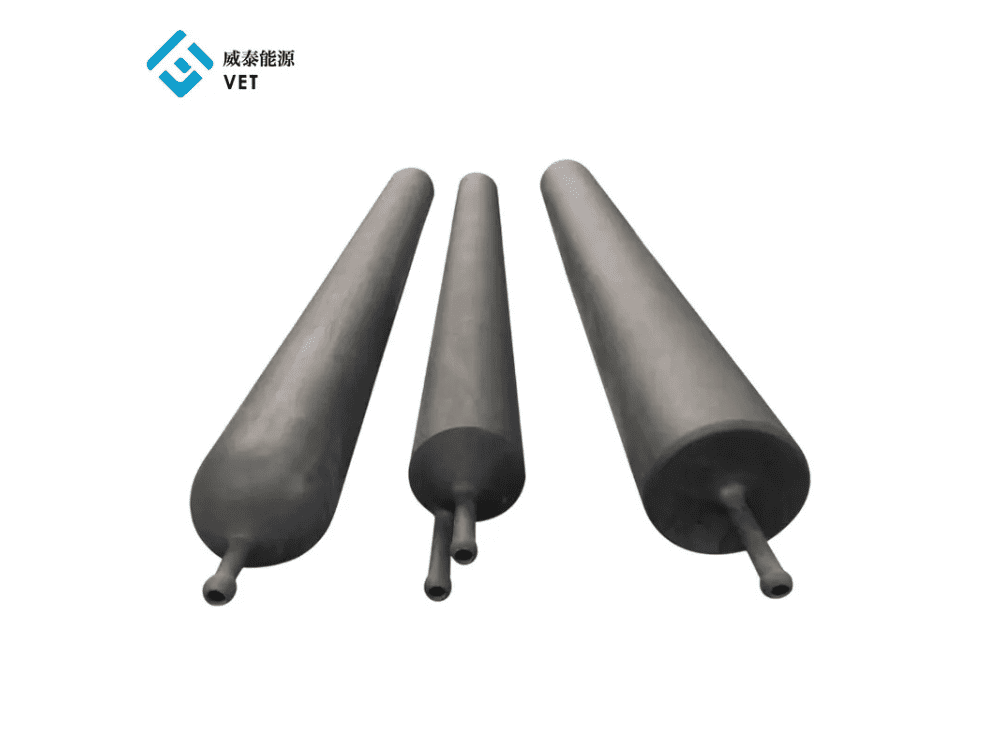
A SiC diffusion tube is a cylindrical high-temperature ceramic chamber used inside semiconductor diffusion and LPCVD furnace systems. Its primary function is to create a clean and thermally stable environment for wafer processing.
During operation, wafer boats loaded with silicon wafers are positioned inside the tube while process gases flow through the chamber under carefully controlled temperature conditions. The diffusion tube helps maintain:
●Stable thermal distribution
●Uniform gas flow
●Low particle contamination
●Controlled chemical reactions
SiC diffusion tubes are widely used in:
●Semiconductor diffusion furnaces
●LPCVD furnace systems
●Thermal oxidation equipment
●Annealing systems
Typical applications include:
●Silicon oxidation
●Phosphorus diffusion
●Boron diffusion
●Polysilicon deposition
●Silicon nitride deposition
In modern fabs, furnace process uniformity requirements are extremely strict. For example, advanced LPCVD processes may require wafer temperature uniformity within ±1°C to ±3°C across the furnace zone. The thermal performance of the diffusion tube directly impacts this capability.
Why Silicon Carbide (SiC) Is Used for Diffusion Tubes
The growing use of silicon carbide diffusion tubes comes from the exceptional material properties of SiC under high-temperature semiconductor process conditions.
One of the most important advantages is thermal stability. SiC can continuously operate at temperatures above 1200°C, while maintaining strong structural integrity during repeated thermal cycling.
Another key advantage is thermal conductivity. The thermal conductivity of SiC is typically around:
●120–200 W/m·K for high-purity SiC
●Compared with quartz at only ~1.4 W/m·K
This significant difference allows faster and more uniform heat transfer inside the furnace, helping improve wafer-to-wafer process consistency.
SiC also provides:
●Excellent resistance to chlorine- and fluorine-based process gases
●Higher mechanical strength than quartz
●Better resistance to thermal shock
●Lower risk of deformation during long production cycles
These characteristics make SiC furnace tubes particularly suitable for advanced semiconductor thermal processing environments where long uptime and stable process repeatability are critical.
Structure and Design Characteristics of SiC Diffusion Tubes
Most semiconductor SiC diffusion tubes feature a precision cylindrical design optimized for vertical or horizontal furnace systems.
Unlike ordinary industrial ceramic tubes, semiconductor-grade SiC tubes require extremely tight manufacturing tolerances because small dimensional changes can affect:
●Gas residence time
●Thermal distribution
●Wafer spacing
●Deposition uniformity
The internal surface quality is also highly important. Smooth and high-purity surfaces help minimize:
●Particle generation
●Process residue buildup
●Metallic contamination
Some advanced furnace tubes use CVD SiC coatings to further improve corrosion resistance and surface purity.
The wall thickness and structural design must also balance thermal efficiency with mechanical durability. During semiconductor processing, furnace tubes may experience hundreds or even thousands of heating and cooling cycles over their operational lifetime.
The Role of SiC Diffusion Tubes in Semiconductor Processes
In semiconductor manufacturing, the SiC diffusion tube functions as more than just a physical chamber. It directly affects process stability and wafer quality.
In thermal oxidation processes, the tube helps maintain uniform oxygen flow and temperature stability, which are essential for producing high-quality oxide films.
In diffusion processes, stable gas flow inside the SiC tube supports accurate dopant distribution for phosphorus or boron diffusion.
For LPCVD applications, such as polysilicon and silicon nitride deposition, the thermal conductivity of SiC helps improve film thickness uniformity across the wafer batch.
Common Problems of SiC Diffusion Tubes
Although SiC offers excellent durability, diffusion tubes still experience long-term wear under semiconductor process conditions.
One common issue is particle contamination caused by surface aging or process residue accumulation. Over time, repeated exposure to high-temperature chemistries can gradually roughen the internal surface, increasing contamination risk.
Thermal cracking is another challenge. Rapid temperature ramping or uneven wafer loading can generate thermal stress that may eventually cause microcracks or structural failure.
Chemical erosion may also occur under aggressive halogen-based cleaning environments. Long-term exposure to fluorine-containing gases can slowly degrade the tube surface and affect process stability.
In production environments, these issues may lead to:
●Temperature drift
●Film non-uniformity
●Increased particle counts
●Reduced process repeatability
For this reason, semiconductor fabs typically monitor furnace tube performance through regular qualification and preventive maintenance programs.
Maintenance and Lifetime Management
Proper maintenance is essential for extending the operational life of SiC furnace tubes and maintaining stable semiconductor process performance.
Most fabs implement scheduled inspection cycles that include:
●Visual surface inspection
●Particle trend monitoring
●Furnace qualification testing
●Thermal uniformity verification
Cleaning methods may include wet chemical cleaning or high-temperature bake treatments to remove process residues.
In high-volume semiconductor production, diffusion tube replacement is often based on:
●Process hours
●Thermal cycle counts
●Particle performance
●Qualification limits
Rather than waiting for visible damage, fabs usually replace furnace tubes before process drift impacts wafer yield.
As semiconductor technology advances toward smaller process nodes and more demanding thermal applications, the importance of reliable silicon carbide diffusion tubes will continue to grow. Their ability to support stable thermal processing, low contamination, and long-term furnace reliability makes them critical components in modern semiconductor manufacturing equipment.
Post time: May-08-2026