

Selecting the optimal CVD coating material is crucial for enhancing component performance and longevity. This post directly compares Titanium Nitride (TiN), Aluminum Oxide (Al2O3), and Silicon Carbide (SiC) CVD coatings to guide material selection for specific industrial applications. Understanding the distinct performance profiles of each material is key to making informed decisions. The global market for CVD coating reached USD 20.38 billion in 2023, with projections indicating growth to USD 44.2 billion by 2032, reflecting a compound annual growth rate of 7.58% during the forecast period.
Key Takeaways
- CVD coatings like TiN, Al2O3, and SiC make parts stronger and last longer.
- TiN coatings are good for tools and decorations; they are hard and resist wear.
- Al2O3 coatings work well in very hot places and resist chemicals; they protect parts from rust.
- SiC coatings are best for extreme heat and chemicals, like in computer chip making; they are very pure and strong.
- Choosing the right coating depends on what the part needs to do and where it will be used.
Understanding CVD Coating Technology
What is Chemical Vapor Deposition (CVD)?
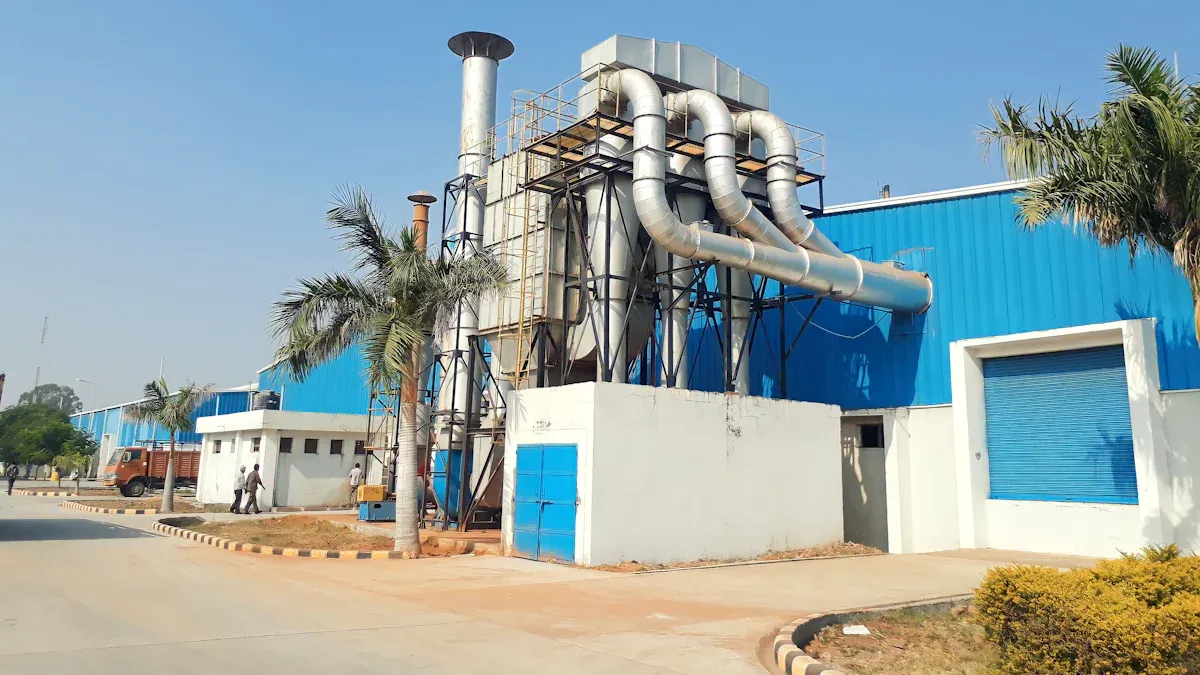
Chemical Vapor Deposition (CVD) is a sophisticated process that deposits thin films of solid materials onto a substrate from a gaseous phase. This technique involves a series of chemical reactions occurring at or near the substrate surface. Fundamental chemical reactions in CVD include thermal decomposition, reduction, oxidation, and compound formation. These reactions often involve gas-phase reactions, where intermediate species form through precursor chemical reactions. Subsequently, surface reactions pertain to the diffusion and reaction of these species at the substrate surface, leading to the desired film growth. Other common reaction types include hydrolysis, pyrolysis, and displacement.
Why CVD Coatings are Essential for Material Enhancement
CVD coatings are crucial for enhancing material properties across various industries. They offer significant advantages over other coating technologies. For instance, CVD coatings protect against oxidation and corrosion, extending component lifespan. Manufacturers can tailor these coatings for specific performance goals, such as achieving chemical inertness. This technology significantly improves the performance and properties of biomedical implants, enhancing biocompatibility, wear resistance, hardness, and durability. CVD is superior in conformality, providing a uniform film texture even on intricate internal and external areas. This allows for a uniform material layer deposition on all implant surfaces. High-quality gaseous raw components ensure coatings with superior purity. Unlike most PVD processes, the CVD process is not limited to line-of-sight application, enabling the coating of all areas of a part, including threads and blind holes. The coating bonds to the surface during the reaction, creating superior adhesion compared to typical PVD or low-temperature spray coatings. Precursor gas optimization allows for coatings with enhanced wear resistance, high lubricity, corrosion resistance, or high purity.
Titanium Nitride (TiN) CVD Coating: Performance and Applications
Key Performance Characteristics of TiN CVD Coating
Titanium Nitride (TiN) CVD coatings exhibit several outstanding performance characteristics. They possess exceptional hardness, typically ranging from 2000 to 2500 HV, which significantly enhances wear resistance. This high hardness makes components more durable against abrasive and erosive forces. TiN also offers good chemical inertness, resisting reactions with many corrosive substances. Its low coefficient of friction helps reduce heat generation and improve operational efficiency. Furthermore, TiN coatings have an attractive golden color, making them suitable for decorative purposes. The coating maintains its integrity and performance at elevated temperatures, though its oxidation resistance is not as high as some other materials.
Typical Applications of TiN CVD Coating
Industries widely adopt TiN CVD coatings for various critical applications due to their robust properties. Manufacturers frequently apply TiN to cutting tools, such as drills, end mills, and saw blades, to extend their lifespan and improve cutting performance. Medical implants also benefit from TiN coatings, which enhance biocompatibility and wear resistance. Aerospace components utilize TiN for its durability and protection against harsh operating conditions. Additionally, the appealing golden finish makes TiN a popular choice for decorative coatings on items like jewelry and watches.
Advantages and Limitations of TiN CVD Coating
TiN CVD coatings offer significant advantages. They dramatically increase the service life of tools and components, reducing replacement costs and downtime. The coatings provide excellent wear and abrasion resistance, crucial for parts subjected to constant friction. Their good adhesion to various substrates ensures a reliable and long-lasting bond. However, TiN coatings do have limitations. They exhibit moderate thermal stability compared to some advanced ceramics, with oxidation occurring at temperatures above 500°C in air. While hard, they can be brittle, which may lead to chipping under severe impact loads. The deposition process often requires high temperatures, which can limit its application to certain substrate materials.
Aluminum Oxide (Al2O3) CVD Coating: Performance and Applications
Key Performance Characteristics of Al2O3 CVD Coating
Aluminum Oxide (Al2O3) CVD coatings are renowned for their exceptional properties, making them highly valuable in various industrial settings. They exhibit outstanding hardness and excellent thermal stability.
| Project | Unit | Numerical value |
|---|---|---|
| Vickers Hardness | HV 0.5 | 1,800 |
| Thermal Expansion Coefficient | 1n-5k-1 | 8.2 |
These coatings also offer superior chemical inertness, resisting attack from many aggressive chemicals. Their high electrical resistivity makes them excellent electrical insulators. Furthermore, Al2O3 coatings provide remarkable oxidation resistance, especially at elevated temperatures, protecting underlying materials from degradation.
Typical Applications of Al2O3 CVD Coating
Al2O3 coatings find widespread use in demanding environments where wear and corrosion are significant concerns. They serve as established solutions for protection in various applications. Manufacturers apply Al2O3 coatings to tungsten substrates to improve oxidation resistance at temperatures above 800 °C, particularly exceeding 1000 °C, where tungsten typically forms and sublimes WO3. These coatings also effectively reduce the oxidation rate of γ-TiAl alloys between 900–1000 °C. Al2O3 is a classic coating system for cemented carbide tools, which operate under conditions requiring good hardness, wear resistance, strong bonding, and thermal stability. Additionally, researchers consider Al2O3 coatings for protecting fuel cladding in lead-cooled fast reactors (LFRs) due to their superior corrosion resistance in nuclear environments.
Advantages and Limitations of Al2O3 CVD Coating
Al2O3 coatings offer significant advantages, including excellent hardness, high-temperature stability, and superior chemical and oxidation resistance. These properties extend component lifespan in harsh conditions. However, Al2O3 coatings also present certain limitations.
- The substrate temperature for CVD, typically around 700 °C, is high enough to melt aluminum alloys. This restricts the types of materials that can receive the coating.
- This high process temperature is not favorable for coating mechanical parts, especially those made of light metals with low melting points, such as aluminum alloy, which are used to reduce machine weight.
- The conventional high deposition temperature of about 1050°C for Al2O3 coatings has significantly restricted the development of several hybrid coatings, such as TiC/TiN/TiCN/Al2O3.
- Lowering the Al2O3 deposition temperature would also reduce the inherent residual stresses in the coating that tend to cause cracking.
Silicon Carbide (SiC) CVD Coating: Performance and Applications
Key Performance Characteristics of SiC CVD Coating
Silicon Carbide (SiC) CVD coatings possess an impressive array of properties, making them ideal for extreme environments. These coatings exhibit exceptional hardness, typically ranging from 2000 to 2800 HV (Vickers hardness). This high hardness provides superior wear and abrasion resistance. SiC also boasts excellent thermal conductivity, often falling between 116 W/mK and 300 W/mK. This property allows for efficient heat dissipation. Furthermore, SiC coatings offer outstanding chemical inertness and ultra-high purity. They resist reactions with acids, alkalis, and other aggressive chemicals, ensuring stability in corrosive environments. This chemical resistance, combined with high-temperature stability, makes SiC a robust material choice.
Typical Applications of SiC CVD Coating
Industries widely employ SiC coatings in applications demanding high performance and reliability. In aerospace, manufacturers use SiC for engine parts, thermal barriers, turbine blades, heat shields, thrusters, and rocket nozzles. These components operate under extreme temperatures and harsh conditions. The semiconductor industry also heavily relies on SiC. It protects wafer processing equipment, including wafer carriers, etching chambers, and deposition chambers in LED and semiconductor manufacturing. SiC also finds use in high-power and high-frequency semiconductors, RF amplifiers, and switching devices, where its electrical properties and purity are critical.
Advantages and Limitations of SiC CVD Coating
SiC coatings offer significant advantages. Their ultra-high purity is crucial for maintaining contamination-free environments, especially in semiconductor manufacturing. They provide durability in harsh environments, protecting equipment like heat exchangers and reactors in the energy industry from corrosive chemicals and extreme heat. The chemical inertness of SiC ensures stability, extending equipment lifespan and reducing maintenance needs. High purity levels minimize impurities, enhancing performance in sensitive applications. However, SiC coatings do have limitations. The high deposition temperatures required for CVD SiC can restrict its application to certain substrate materials. This process can also be more complex and costly compared to other coating methods.
Direct Performance Comparison of CVD Coatings: TiN vs. Al2O3 vs. SiC
Comparative Analysis of Hardness and Wear Resistance
Each CVD Coating offers distinct advantages in hardness and wear resistance. Titanium Nitride (TiN) coatings typically exhibit a Vickers hardness ranging from 2000 to 2500 HV. This provides good protection against abrasive wear. TiN also shows friction coefficients between 0.4 and 0.9. However, direct quantitative comparisons of wear rates or friction coefficients between TiN, Al2O3, and SiC CVD coatings are not extensively documented in a single, comprehensive study. Aluminum Oxide (Al2O3) coatings generally possess a Vickers hardness of approximately 1800 HV 0.5, offering excellent wear resistance, especially in high-temperature applications. Silicon Carbide (SiC) coatings stand out with exceptional hardness, typically ranging from 2000 to 2800 HV. This makes SiC highly resistant to both abrasive and erosive wear, often surpassing TiN and Al2O3 in extreme conditions.
Comparative Analysis of Thermal Stability and Oxidation Resistance
Thermal stability and oxidation resistance are critical factors for high-temperature applications. TiN coatings demonstrate moderate thermal stability. They begin to oxidize in air at temperatures above 500°C. In oxygenated conditions, TiN coatings fully oxidize and spall within a few hundred hours when exposed to high-temperature water environments. This indicates poor protective qualities under such conditions. Aluminum Oxide (Al2O3) coatings, conversely, offer superior thermal stability and oxidation resistance. They effectively protect underlying materials at temperatures exceeding 1000°C, making them ideal for extreme heat environments. Silicon Carbide (SiC) coatings also exhibit outstanding thermal stability and oxidation resistance. Researchers have compared the hydrothermal corrosion behavior of SiC with Al2O3, highlighting SiC’s robust performance in harsh thermal and chemical environments. SiC maintains its integrity and protective properties at very high temperatures, often exceeding those where TiN would degrade.
Comparative Analysis of Chemical Inertness and Electrical Properties
The chemical inertness and electrical properties of these coatings vary significantly, influencing their suitability for specific applications. TiN coatings offer good chemical inertness, resisting many corrosive substances. Electrically, bulk TiN has an electrical resistivity between 1.0 × 10⁻⁷ and 4.0 × 10⁻⁷ Ω·m. PVD TiN shows resistivity from 3.0 × 10⁻⁷ to 1.0 × 10⁻⁶ Ω·m. CVD TiN exhibits a resistivity range of 2.0 × 10⁻⁶ to 1.0 × 10⁻⁴ Ω·m. This places TiN in the semiconductor or semi-metallic category.
| Material | Form | Electrical Resistivity (Ω·m) |
|---|---|---|
| TiN | Bulk | 1.0 × 10⁻⁷ – 4.0 × 10⁻⁷ |
| TiN | PVD | 3.0 × 10⁻⁷ – 1.0 × 10⁻⁶ |
| TiN | CVD | 2.0 × 10⁻⁶ – 1.0 × 10⁻⁴ |
Aluminum Oxide (Al2O3) coatings are highly chemically inert, resisting attack from most acids, alkalis, and other aggressive chemicals. Al2O3 is a strong electrical insulator. Thin Al2O3 films grown via Atomic Layer Deposition (ALD) exhibit a dielectric constant of 6.7 for 120 Å thick films. The leakage current density in Al2O3 films decreases as film thickness increases, with values around 1 nA/cm² for thicker films. Fowler-Nordheim (FN) tunneling onset voltage in Al2O3 films increases with thickness, ranging from approximately 3 V for 60 Å films to about 5.5 V for 184 Å films. Silicon Carbide (SiC) coatings also boast exceptional chemical inertness and ultra-high purity. They resist reactions with a wide range of corrosive agents. SiC can function as a semiconductor or an insulator depending on its doping and crystalline structure. Its electrical resistivity is crucial for applications in high-power and high-frequency semiconductors.
Cost-Benefit Considerations for Each CVD Coating Material
Evaluating the cost-benefit ratio for each CVD coating material is essential for informed decision-making. Titanium Nitride (TiN) coatings generally represent a more economical option. They offer a strong balance of hardness, wear resistance, and a visually appealing golden finish. This makes TiN a cost-effective choice for applications requiring improved tool life and moderate protection without extreme thermal or chemical demands. Its widespread use in cutting tools and decorative items reflects its favorable performance-to-cost ratio for many standard industrial needs.
Aluminum Oxide (Al2O3) coatings typically involve a higher initial investment compared to TiN. However, their superior thermal stability, oxidation resistance, and chemical inertness often justify this increased cost. For applications in high-temperature environments, such as furnace components or advanced cutting inserts, Al2O3 significantly extends component lifespan. This reduces replacement frequency and maintenance costs over time. The enhanced durability and protection Al2O3 provides translate into long-term savings, making it a beneficial choice despite the higher upfront expense.
Silicon Carbide (SiC) coatings often carry the highest application cost among the three materials. The complex deposition processes and the need for ultra-high purity contribute to this expense. Despite the higher cost, SiC offers unparalleled performance in the most demanding environments. Its exceptional hardness, chemical inertness, and thermal conductivity make it indispensable for critical applications in semiconductor processing, aerospace, and nuclear industries. In these sectors, the cost of component failure or contamination far outweighs the initial coating expense. SiC’s superior longevity and protection ensure operational reliability and safety, providing a significant return on investment for specialized, high-performance requirements.
Factors Influencing Optimal CVD Coating Material Selection
Selecting the optimal CVD coating material requires a thorough understanding of the application’s specific demands. Several key metrics dictate this choice. Durability and wear resistance are paramount for components subjected to constant friction or abrasion. SiC excels in these areas, offering superior resistance to wear, erosion, and abrasion due to its dense, pore-free structure and strong adhesion. Al2O3 also provides excellent wear resistance, particularly at elevated temperatures, while TiN offers good protection for less extreme conditions.
Surface coverage and complexity also play a crucial role. CVD coatings generally excel in coating complex geometries and internal surfaces with uniform thickness. They provide consistent coverage across non-line-of-sight areas. This characteristic is vital for intricate parts where uniform protection is necessary. The environmental and chemical resistance of the coating is another critical factor. For aggressive substances like H₂S and strong acids, SiC and Al2O3 offer superior resistance due to their pore-free structure, forming a robust barrier.
Coating thickness, typically ranging from 25-75 microns, is highly uniform across CVD applications. This consistent thickness contributes to a smooth, polishable surface finish. The operating temperature of the application significantly influences material choice. Al2O3 and SiC are suitable for higher temperatures, protecting robust materials effectively. Finally, the application cost, while higher for some CVD coating materials, often reflects superior longevity and protection. This makes the initial investment worthwhile for extending component life and ensuring reliable performance in challenging industrial settings.
Real-World Application Scenarios: Choosing the Best CVD Coating
CVD Coating for High-Speed Machining and Cutting Tools
High-speed machining and cutting tools demand exceptional durability and wear resistance. These tools operate under intense friction and heat, which quickly degrades unprotected surfaces. Selecting the correct coating significantly extends tool life and improves machining efficiency. Titanium Nitride (TiN) coatings have long served as a standard for general-purpose cutting tools. They provide good hardness and reduce friction, which helps prevent premature tool wear. However, more specialized applications, particularly involving hardened steels, require coatings with enhanced thermal and abrasive resistance.
For high-speed cutting of steel, Aluminum Oxide (Al₂O₃) coatings offer exceptional thermal and chemical stability at elevated temperatures. This stability makes them ideal for maintaining tool integrity during aggressive machining operations. Another strong contender in this area is Titanium Carbonitride (TiCN). When applied through CVD, TiCN provides excellent abrasive wear resistance. This characteristic proves particularly beneficial in steel machining, where hard inclusions in the workpiece can rapidly abrade the tool surface. These advanced coatings allow tools to operate at higher speeds and feeds, leading to increased productivity and superior surface finishes on machined parts.
CVD Coating for Corrosive Chemical Environments
Components operating in corrosive chemical environments face constant threats from chemical attack, which can lead to material degradation and premature failure. Effective protective coatings are essential for ensuring longevity and reliability in these harsh conditions. Aluminum Oxide (Al₂O₃) and Silicon Carbide (SiC) CVD coatings stand out for their superior chemical inertness.
Al₂O₃ coatings prove highly effective in harsh supercritical water (SCW) environments. These conditions feature elevated temperatures, often around 500 °C, high pressures of 25 MPa, and strong oxidizing agents. Alumina-based oxide scales are well-known for mitigating various types of corrosion in SCW conditions. These include stress corrosion cracking, pitting, and general corrosion, which significantly extends the lifespan of components.
SiC coatings primarily protect carbon/carbon (C/C) composites from oxidation at high temperatures, specifically above 723 K, in oxygen-containing environments. This protection is crucial for C/C composites, as their application as high-temperature structural materials is otherwise limited by oxidation. SiC ceramic coatings also protect C/C composites against oxidation in environments containing water vapor at 1773 K. While water vapor can accelerate the oxidation of SiC ceramics, it also benefits the formation of a glassy layer. This glassy layer helps seal and protect the C/C matrix faster, ensuring robust performance even in challenging humid, high-temperature conditions.
CVD Coating for High-Temperature Oxidation Resistance
Materials exposed to extreme heat and oxidizing atmospheres require coatings that can withstand severe conditions without degrading. Long-term oxidation resistance at temperatures exceeding 1000°C is a critical requirement for many aerospace, energy, and industrial applications.
CVD-prepared NiAl coatings demonstrate strong bonding with the substrate and higher density. These properties contribute to better high-temperature oxidation resistance. At temperatures above 1100°C, nickel aluminide coatings rapidly form a thermodynamically stable α-Al₂O₃ scale. This scale is crucial for providing long-term oxidation protection to the underlying material.
Silicon Carbide (SiC) coatings also exhibit excellent oxidation resistance. They achieve this by forming a protective SiO₂ glass layer. This glassy layer can effectively repair defects such as cracks and pores, maintaining the coating’s integrity. For example, a SiC coating showed a weight loss of only 0.48 wt% after nine thermal cycles between 1873 K (1600°C) and room temperature. This result indicates effective oxidation resistance even under extreme thermal fluctuations. Furthermore, multilayer SiC/B/SiC coatings provide superior oxidation protection for C/SiC composites compared to three-layer SiC coatings. These multilayer systems perform well across a wide temperature range, from 700°C to 1500°C. ZrB₂-SiC is also recognized as a baseline ultrahigh-temperature ceramic (UHTC). It offers excellent oxidation and ablation resistance in oxidizing atmospheres at high temperatures, making it suitable for the most demanding applications.
CVD Coating for Electrical Insulation and Wear Protection
Components often require both electrical insulation and robust wear protection, especially in demanding environments. Silicon Carbide (SiC) coatings excel in these dual roles. They provide superior thermal management and electrical insulation, crucial for the reliability and longevity of systems in electric and hybrid vehicles. For example, SiC coatings are essential in battery management systems and high-voltage power electronics within the automotive sector. These applications demand efficient heat dissipation while maintaining electrical isolation.
SiC coatings also find extensive use in high-temperature electronic applications. They offer excellent thermal management while ensuring electrical isolation in power electronics, electronic device packaging, and power module substrates. SiC serves as an ideal material for electrical insulators in thermally demanding environments where conventional polymer insulators would degrade. It offers a high dielectric strength, typically ranging from 15-25 kV/mm. Beyond electrical properties, SiC coatings provide exceptional wear protection in industrial applications. Components protected with SiC coatings show significantly improved service life, often 3-5 times longer than conventional materials, in slurry pumping operations. This improvement comes from their dense, non-porous nature and reduced friction. Similarly, SiC coatings enhance wear resistance in highly abrasive environments like sandblasting operations. Valve components, pump seals, nozzles, and bearing surfaces also benefit from the exceptional wear performance of SiC coatings, effectively addressing mechanical wear as a primary failure mechanism.
CVD Coating for Semiconductor Processing and High-Purity Needs
The semiconductor industry demands materials with ultra-high purity and exceptional chemical inertness to prevent contamination and ensure process integrity. Solid Silicon Carbide (CVD SiC) stands as the primary choice for components in semiconductor processing equipment. This includes parts like RTP/EPI rings and bases, and plasma etch cavity components. Manufacturers prefer CVD SiC due to its ultra-high purity, exceeding 99.9995%. It also offers exceptional resistance to chemicals. Furthermore, CVD SiC reduces particle generation because it lacks secondary phases at grain edges. This material can be effectively cleaned with hot HF/HCl without significant degradation. This characteristic contributes to a longer service life and fewer particles, which are critical for maintaining the pristine conditions required in semiconductor manufacturing.
CVD Coating for Multilayer Systems and Enhanced Performance
Multilayer coating systems combine different materials to achieve enhanced performance beyond what a single layer can offer. These systems leverage the unique properties of each layer to create a synergistic effect. For instance, one layer might provide excellent hardness, while another offers superior corrosion resistance or thermal stability. This approach allows engineers to tailor coatings precisely to specific application requirements. Multilayer systems can overcome the limitations of individual materials. For example, a hard but brittle layer can be combined with a tougher, more ductile layer to improve overall fracture resistance. Similarly, a layer with high oxidation resistance can protect an underlying layer that provides excellent wear resistance but is susceptible to high-temperature degradation. This strategic combination of materials leads to coatings with superior durability, extended lifespan, and improved operational efficiency in complex industrial environments.
The optimal CVD coating material choice depends entirely on specific application demands. TiN, Al2O3, and SiC CVD coatings each offer unique advantages for different industrial challenges. Informed decision-making based on their distinct performance profiles maximizes component longevity and operational efficiency. Engineers must carefully consider all factors to select the best material for their specific needs. This ensures superior protection and extended service life for critical components.
FAQ
What is the primary advantage of TiN CVD coating?
TiN coatings offer excellent hardness and wear resistance. They also provide good chemical inertness. Many industries use TiN for cutting tools and decorative applications. It balances performance and cost effectively.
Which CVD coating provides the best oxidation resistance at very high temperatures?
Al2O3 and SiC CVD coatings both offer superior oxidation resistance. Al2O3 protects materials above 1000°C. SiC forms a protective SiO2 glass layer, effective even at 1600°C. They excel in extreme heat.
Why is SiC CVD coating preferred for semiconductor processing?
SiC coatings provide ultra-high purity, exceeding 99.9995%. They offer exceptional chemical resistance and minimize particle generation. These properties are crucial for preventing contamination in sensitive semiconductor manufacturing environments.
Do CVD coatings have limitations regarding substrate materials?
Yes, CVD processes often require high deposition temperatures. This limits their application to certain substrate materials. For example, high temperatures can melt low-melting-point metals like aluminum alloys.
Post time: Nov-17-2025