
Key Summary: Quartz boats: key high-purity fused silica carriers for PV & semiconductor high-temp processes. Design, selection, maintenance, yield. Selection Guide.
What Is a Quartz Boat? Core Role of High-Purity Quartz Boats in PV and Semiconductor High-Temperature Processes
Key takeaway: A quartz boat is not just a carrier. It is a precision tool that holds wafers at exact pitch, keeps them clean, and maintains atmosphere uniformity inside an 800–1200°C furnace. It directly affects diffusion, CVD, and annealing yield.
A quartz boat—sometimes called a quartz carrier—is typically made from high-purity fused silica and features a multi-slot design. Its job is specific: hold silicon wafers, semiconductor substrates, or other materials during high-temperature processes. In PV and semiconductor manufacturing, it is essential for diffusion, chemical vapor deposition (CVD), annealing, and oxidation.
Its core functions split into two main areas:
| Application | Main use | What the quartz boat must deliver |
|---|---|---|
| PV | Phosphorus diffusion to form PN junctions; passivation layer deposition | Resistance to POCl₃, stable slot pitch, no cracking under thermal shock |
| Semiconductor | Wafer carrier for oxidation, etching, thin-film deposition | 5N purity, low metal outgassing, high dimensional accuracy |
Simply put, if the quartz boat fails inside the furnace, yield discussions become meaningless. To see different slot counts, sizes, and purity grades, visit our High-Purity Quartz Boat Product Series.
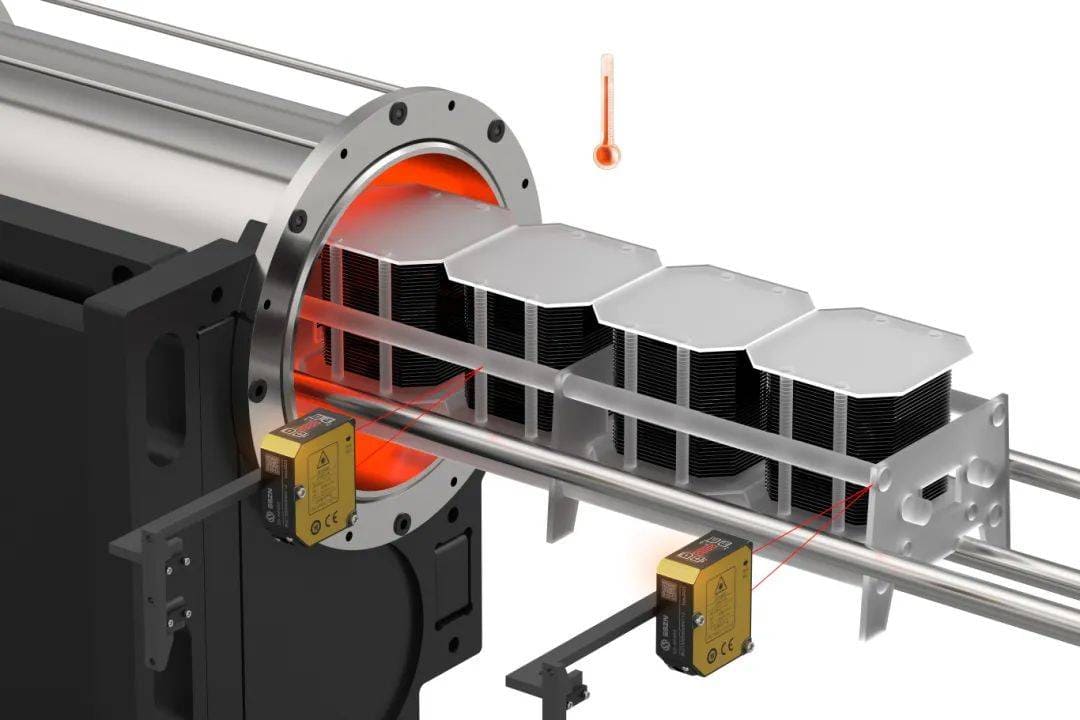
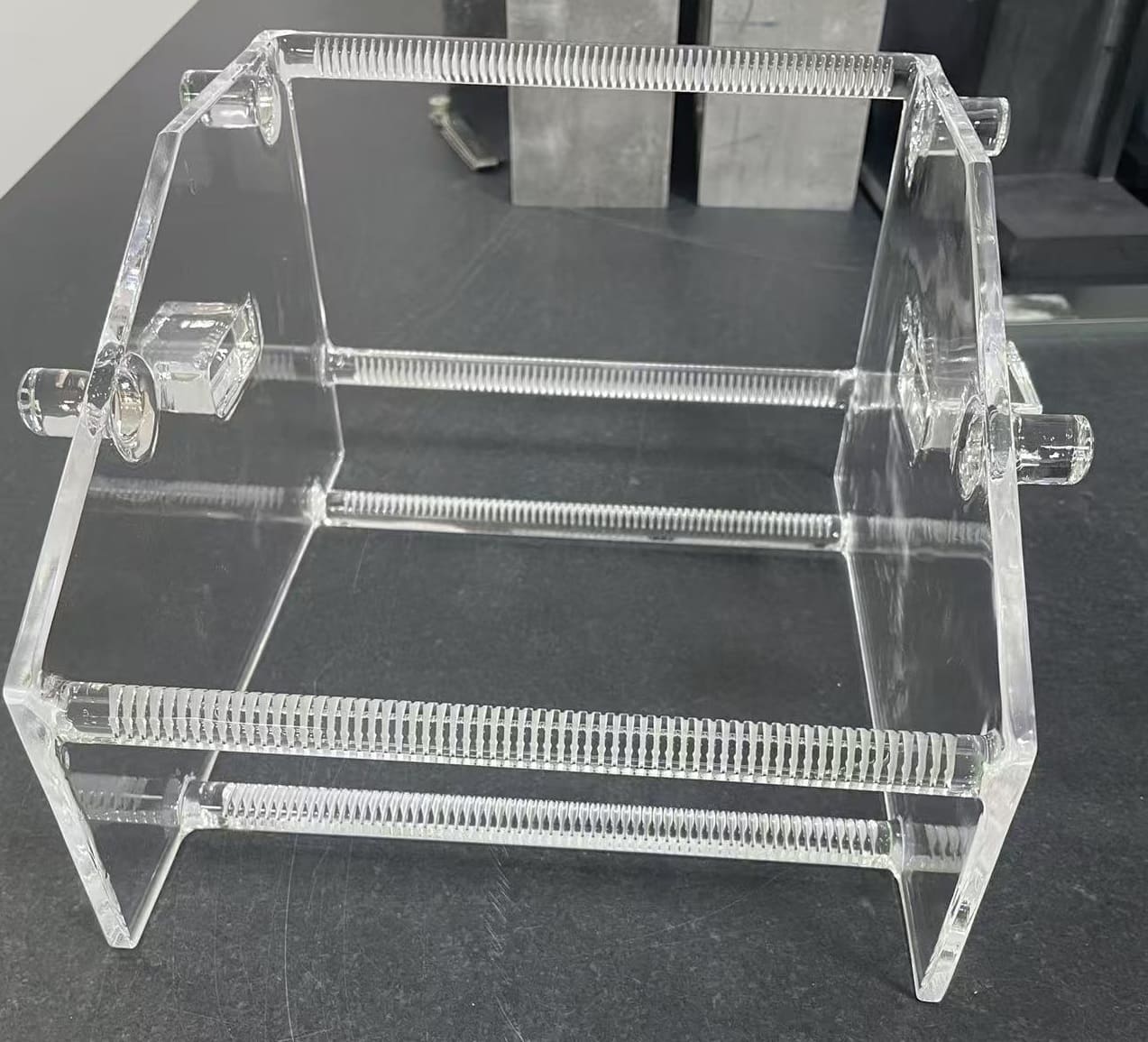
Design and Manufacturing of High-Purity Fused Silica Quartz Boats: Purity, CTE, and Slot Pitch Control
Key takeaway: Quartz boat design comes down to four things: high purity, high-temperature durability, low CTE, and tight slot pitch. In manufacturing, CNC machining, casting, polishing, and acid cleaning all affect final service life.
When engineers design a quartz boat, they focus on these parameters first:
- Ultra-high purity: Raw silica purity must exceed 99.99% to avoid contaminating wafers.
- High-temperature resistance: It must withstand long-term exposure above 1200°C without structural degradation.
- Low coefficient of thermal expansion (CTE): CTE should be as low as possible. High-quality fused silica is about 5.5×10⁻⁷/°C over 20–1000°C—not 5.5×10⁻⁶/°C. That order-of-magnitude difference directly affects thermal shock resistance.
- Precision slots: Slot pitch tolerance should be within ±0.1 mm. Semiconductor-grade boats often require even tighter tolerances to ensure uniform heating and gas flow.
The manufacturing flow can be simplified into this table:
| Step | Key action | Engineering significance |
|---|---|---|
| Raw material purification | Natural quartz sand melted at 2000°C in an arc furnace to remove Fe, Al, Na | Reduces metal contamination risk |
| Forming | CNC machining of slots; complex shapes cast in graphite molds and sintered | Determines slot pitch and dimensional accuracy |
| Surface finishing | Diamond tool polishing to Ra < 0.5 μm; acid cleaning to remove residue | Reduces particle adhesion |
| Testing | Thermal shock cycling between 25°C and 1200°C; GDMS for trace impurities | Verifies crack resistance and purity |
For custom slot profiles, pitch, or special dimensions, see our Quartz Boat Custom Machining Services.
Why Quartz Boats Are Irreplaceable: Long-Tail Comparison with SiC Boats and Graphite Boats
Key takeaway: Quartz boats are irreplaceable because of three properties: chemical inertness, thermal stability, and optical transparency. Compared with SiC and graphite boats, they offer the best overall cost-performance for PV phosphorus diffusion and semiconductor oxidation/CVD.
Quartz boats resist acids, bases, chlorine, and process gases at high temperatures. Because their CTE is extremely low, they handle rapid thermal cycling better than metals or ceramics. Optical transparency also allows UV–IR light to pass through, supporting photo-assisted CVD.
That said, they are not the right choice for every process. When selecting a carrier, compare the three main options:
| Carrier type | Advantages | Limitations | Typical applications |
|---|---|---|---|
| Quartz boat | High purity, chemical inertness, good thermal shock resistance, transparent | Devitrifies with long-term use above 1150°C | PV phosphorus diffusion, semiconductor oxidation/CVD |
| SiC boat | Higher temperature resistance, better mechanical strength | Higher cost; reacts with oxygen | High-temperature boron diffusion, special high-temp processes |
| Graphite boat | Low cost, easy to machine | Carbon contamination can change wafer resistivity | Processes insensitive to carbon contamination |
If you are deciding between quartz and SiC boats, see our Quartz vs. SiC Boat Comparison.
Key Parameters of PV Quartz Boats in Phosphorus Diffusion and PERC Passivation
Key takeaway: The value of PV quartz boats is concentrated in corrosion resistance during phosphorus diffusion and film uniformity during PERC passivation. If slot design is inadequate, film thickness uniformity is hard to keep within ≤3%.
On a PV line, the classic battlefield for quartz boats is phosphorus diffusion. The process: wafers are loaded into a quartz boat, then POCl₃ gas is introduced at 850–950°C to form PN junctions. Quartz offers excellent resistance to the highly corrosive POCl₃ environment, which is one reason it has remained dominant.
PERC cell passivation also depends on it. During aluminum oxide deposition, the quartz boat holds wafers for rear-side passivation, helping improve conversion efficiency. The critical parameter here is slot design—it directly affects film thickness uniformity. The engineering target is usually ≤3%.
| PV process | Temperature window | Key quartz boat requirement | Consequence of failure |
|---|---|---|---|
| Phosphorus diffusion | 850–950°C | POCl₃ resistance, uniform slot pitch | Non-uniform PN junction, lower efficiency |
| PERC passivation | Aluminum oxide deposition | Slot design, clean surface | Uneven film thickness, poor passivation |
For PERC or TOPCon line adaptation, see our PV Diffusion Quartz Boat Solutions.
How Semiconductor Quartz Boats Ensure Oxidation and CVD Wafer Processing Accuracy
Key takeaway: Semiconductor quartz boats use slotted wall angles, gas flow channels, and high-cleanliness surfaces to ensure wafer orientation, gas distribution, and film thickness uniformity in oxidation and CVD.
In oxidation, wafers are typically loaded vertically into a quartz boat and processed at 1100°C under dry or wet oxidation to grow silicon dioxide layers. One detail matters: slot walls are often tilted at 5–10° to prevent wafer slipping. If the angle is wrong, wafers can shift during push/pull, causing uneven film thickness or breakage.
CVD places even more demand on gas flow design. During silicon nitride or polysilicon deposition, the quartz boat must promote uniform plasma distribution. Advanced designs incorporate gas flow channels to improve film uniformity. This is not a gimmick—it is yield engineering.
| Process | Typical temperature | Quartz boat design point | Value |
|---|---|---|---|
| Dry/wet oxidation | 1100°C | 5–10° slotted wall angle | Prevents slipping, stabilizes orientation |
| CVD silicon nitride/polysilicon | Process-dependent | Gas flow channels, uniform slot pitch | Uniform film, fewer particles |
Front-end semiconductor processes require higher purity and cleanliness. For a complete solution, see our Semiconductor Quartz Products Solutions.
Quartz Boat Maintenance and Lifetime Management: Cleaning, Devitrification Checks, and Microcrack Detection
Key takeaway: Quartz boat lifetime is not about “run it until it breaks.” It is managed through cleaning cycles, devitrification coverage, and microcrack detection. Once devitrification coverage exceeds 5%, replacement should be considered.
Good maintenance reduces downtime significantly. For daily operation, CO₂ snow jet cleaning with deionized water can remove loose particles. Weekly, the boat can be placed in a 5% citric acid solution at 80°C to dissolve metal oxides.
The inspection checklist focuses on two things:
| Inspection item | Symptom | Judgment standard | Action |
|---|---|---|---|
| Devitrification | White spots on quartz surface indicate crystallization | Coverage > 5% | Replace |
| Microcracks | Subsurface defects hard to see by eye | Dye penetrant inspection | Evaluate for scrap or downgrade |
I have seen lines try to save cost by continuing to use heavily devitrified boats. The result: particle and deformation problems appear together, and the final loss is far greater than the cost of replacement. For maintenance and cleaning services, see our Quartz Boat Maintenance and Cleaning Services.
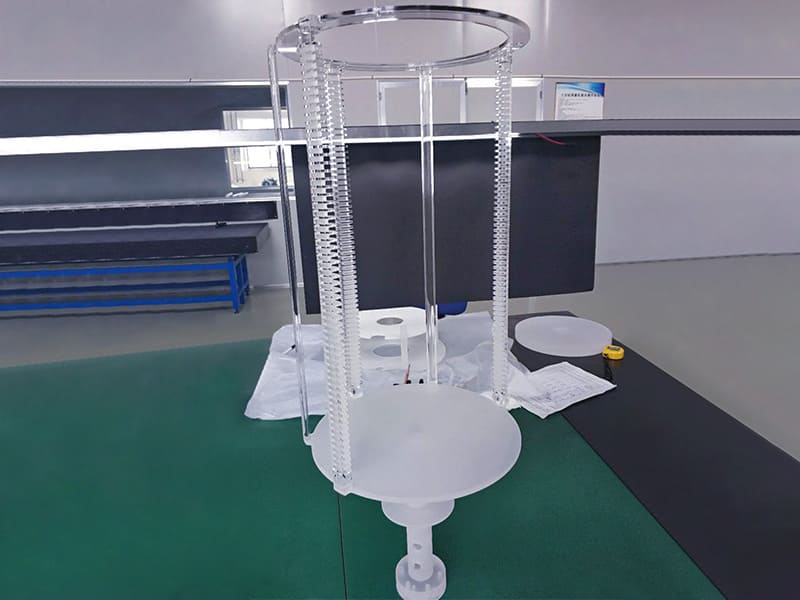
Case Study: How Quartz Boat Structural Optimization Improves Diffusion Furnace Temperature Uniformity
Key takeaway: Quartz boat structural optimization delivers real improvements in diffusion furnace temperature uniformity. In a public study, wafer-to-wafer temperature difference was reduced by 13.77%–50.27%, and the optimized boat was applied at Trina Solar.
Here is a real case. A research team at Trina Solar conducted numerical simulation and structural optimization of a crystalline silicon solar cell diffusion furnace. Their 3D model was validated against actual furnace measurements. They found an obvious “top-hot, bottom-cold” pattern, with especially poor temperature uniformity at both ends of the wafer load.
The team made quartz boat structural optimization one of the core measures. After optimization, the temperature difference between wafers was reduced by 13.77%–50.27% compared with the pre-optimization baseline. What is the value? More uniform temperature, lower thermal stress, lower breakage risk, and more consistent diffusion junction quality. The study explicitly states: “The optimized quartz boat has been successfully applied at Trina Solar Co., Ltd.”
| Metric | Before optimization | After optimization | Engineering value |
|---|---|---|---|
| Wafer-to-wafer temperature difference | Larger, worse at both ends | Reduced by 13.77%–50.27% | Fewer breaks, uniform junctions, stable yield |
| Application status | Simulation-validated | Applied in actual production | Not just theory |
For similar line optimization needs, see our Production Line Temperature Uniformity Optimization Case Study.
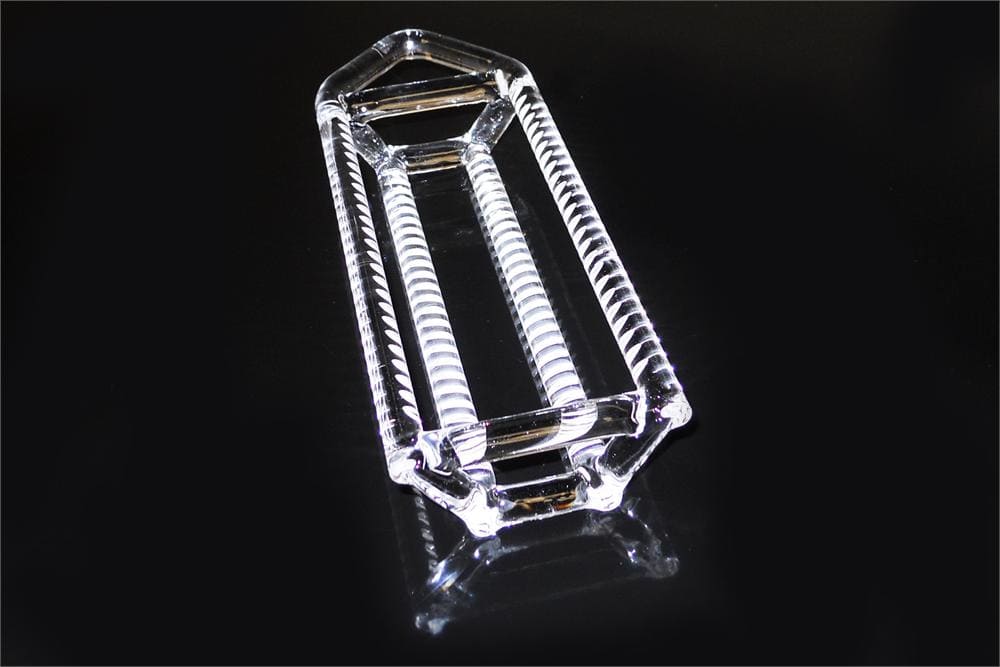
Quartz Boat FAQ: Selection, Lifetime, and Cleaning for Engineers
Key takeaway: Front-line engineers care most about selection boundaries, lifetime judgment, pre-cleaning, inspection reports, and customization differences. These five questions cover the daily decisions.
Q1: How do I choose between quartz, SiC, and graphite boats?
Look at temperature, atmosphere, and contamination tolerance. For 800–1200°C, PV phosphorus diffusion, and semiconductor oxidation/CVD, quartz boats are the first choice. For long-term use above 1150°C, quartz devitrifies, so SiC boats may be considered. Graphite boats are lower cost, but carbon contamination can affect wafer resistivity—use them cautiously for resistivity-sensitive processes.
Q2: How long does a quartz boat last? How do I judge devitrification and microcracks?
Standard PV diffusion quartz boats last about 80–100 runs; enhanced versions can reach 150–180 runs. But do not count runs alone. If white spot coverage exceeds 5%, devitrification is significant. Dye penetrant inspection can reveal subsurface microcracks. If you see obvious deformation or slot pitch drift, replace it immediately.
Q3: Should a new quartz boat be pre-cleaned? How?
Yes. PV quartz boats are usually soaked in dilute HF and rinsed with DI water. Semiconductor-grade boats require stricter cleaning, typically SC1/SC2 standard cleaning. Before first use, an empty firing cycle is recommended to release adsorbed moisture and organics.
Q4: What reports should I check for slot pitch, CTE, and purity acceptance?
Slot pitch should be sampled and measured—not just checked against drawings. CTE can reference GB/T 16535; high-quality fused silica is typically ≤5.5×10⁻⁷/°C over 20–1000°C. Purity can reference GB/T 3284 for chemical composition analysis. Semiconductor-grade boats require ICP-MS or GDMS trace impurity reports. Thermal shock resistance can reference SEMI PV22.
Q5: Can PV and semiconductor quartz boats be used interchangeably? What drives customization lead time and cost?
Not recommended. Semiconductor-grade boats demand higher purity, tighter slot pitch, and lower surface roughness. Cost can be several times that of PV-grade boats. The price difference comes mainly from raw material OH content, cold machining precision, and surface treatment. Custom lead time depends on slot profile, quantity, and inspection requirements. For details, see our Technical Support and FAQ.
Post time: Mar-20-2025