
1.Silicon carbide powder doping technology
Doping an appropriate amount of Ce element in silicon carbide powder can achieve the effect of stable growth of the single crystal form of 4H-SiC. Practical experience has shown that doping of Ce elements in powder materials can increase the growth rate of silicon carbide crystals, making the crystals grow faster. The orientation of silicon carbide can be controlled, making the crystal growth direction more uniform and regular. Inhibit the generation of impurities in crystals, reduce the formation of defects, and make it easier to obtain single-crystal form crystals and high-quality crystals. It can inhibit the corrosion on the back of the crystal and increase the single crystal rate of the crystal.
2.Axial and radial temperature field gradient control technology
The axial temperature gradient mainly affects the crystal growth form and crystal growth efficiency. A too small temperature gradient will lead to the appearance of heterocrystals during the crystal growth process and also affect the transport rate of gaseous substances, resulting in a decrease in the crystal growth rate. Appropriate axial and radial temperature gradients facilitate the rapid growth of SiC crystals and maintain the stability of crystal quality.
3.Basis plane dislocation (BPD) control technology
The main cause of BPD defect formation is that the shear stress in the crystal exceeds the critical shear stress of the SiC crystal, leading to the activation of the slip system. Because BPD is perpendicular to the crystal growth direction, it is mainly produced during the crystal growth process and the later crystal cooling process.
4.Gas phase component ratio regulation and control technology
In the crystal growth process, increasing the carbon-silicon ratio and gas-phase component ratio in the growth environment is an effective measure to achieve stable growth of a single crystal form. Because a high carbon-silicon ratio can reduce large step coalescence and maintain the inheritance of growth information on the seed crystal surface, it can suppress polymorphism.
5.Low-stress control technology
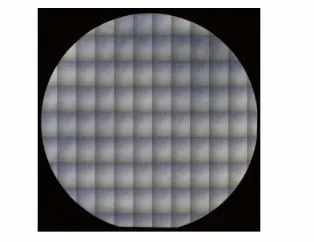
During the crystal growth process, the presence of stress can cause the internal crystal planes of SiC to bend, resulting in poor crystal quality and even crystal cracking. Moreover, large stress can lead to an increase in dislocations in the base plane of the wafer. These defects can enter the epitaxial layer during the epitaxial process, seriously affecting the performance of the device in the later stage.
Here are several methods to improve the process for reducing stress within the crystal:
1.Adjust the temperature field distribution and process parameters to enable SiC single crystal growth to proceed under conditions as close to equilibrium as possible.
2.Optimize the crucible structure and shape to allow the crystal to grow as freely as possible in an unconstrained state.
3.Regarding seed crystal fixation, modify the fixing process to reduce the difference in thermal expansion coefficients between the seed crystal and the graphite holder during heating, thereby minimizing internal stress within the 4H-SiC single crystal. A common approach is to leave a 2 mm gap between the seed crystal and the graphite holder.
4.Modify the crystal annealing process by implementing furnace-cooled annealing for the crystal. Adjust the annealing temperature and duration to fully release internal stress within the crystal.
Looking ahead, high-quality silicon carbide (SiC) single crystal preparation technology will develop in several key directions:
1.Scaling up wafer size: SiC crystal diameter has progressed from initial millimeters to current 6-inch, 8-inch, and even larger 12-inch wafers. Preparing larger SiC crystals enhances production efficiency, reduces costs, and meets the demands of high-power devices.
2.Improving crystal quality: High-quality SiC crystals are crucial for high-performance devices. Although significant progress has been made, defects such as micropipes, dislocations, and impurities still persist, impacting device performance and reliability.
3.Reducing production costs: The relatively high cost of SiC crystal preparation limits its application in certain fields. Cost reduction can be achieved by optimizing growth processes, improving production efficiency, and lowering raw material expenses.
4.Implementing intelligent manufacturing: With advances in AI and big data, SiC crystal growth technology will increasingly embrace intelligence. Real-time monitoring and control via sensors and automated control systems enhance process stability and controllability. Concurrently, leveraging big data analytics optimizes growth data, thereby improving crystal quality and production efficiency.
The preparation technology of high-quality silicon carbide single crystals is one of the current hotspots in semiconductor material research. With the continuous advancement of technology, the silicon carbide crystal growth technology will continue to develop and improve, providing a more solid foundation for the application of silicon carbide in high-temperature, high-frequency, high-power and other fields.
Post time: Jul-10-2025