
Graphite degassing rotor is commonly used in the metal casting industry, especially in the melting and refining of aluminum and its alloys, and in some cases for the treatment of molten zinc, copper alloys and other non-ferrous metals.
They are a key component in the degassing process. By rotating and injecting inert gas, the rotor effectively removes dissolved gases and part of the inclusions from the molten metal, preventing porosity, shrinkage cavities and other defects in castings, and thus ensuring both internal and surface quality of the final products.
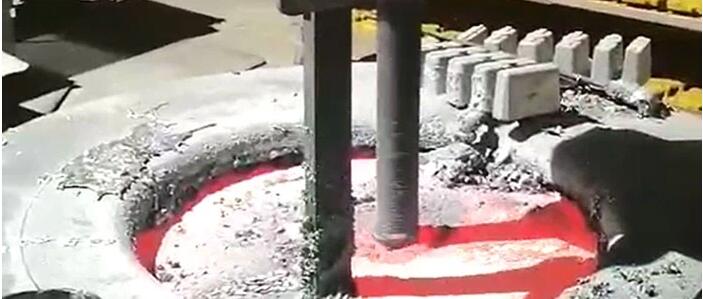
1.Material
Graphite degassing rotors are usually machined from high-purity graphite or isostatic graphite for the following reasons:
-
Excellent high-temperature performance:
They can maintain structural stability at molten metal temperatures (for example, around 700 °C for molten aluminum). -
Chemical stability:
They show low wettability to molten aluminum and other metals, which helps reduce severe erosion and metal adherence. -
Strong corrosion resistance:
They can withstand attack from molten metals and certain fluxes. -
Good machinability:
Graphite can be turned, milled and drilled, making it easy to manufacture rotors in different structures and sizes to suit various furnace designs and process requirements.
2.Working Principle and Main Functions
Stirring the melt to promote gas release
During operation, the graphite rotor is immersed in the molten metal and driven by a motor at high speed.
-
The rotation generates a stirring effect, which makes the molten metal flow more vigorously;
-
This helps bring dissolved gases and inclusions that were originally trapped or unevenly distributed within the melt up towards the surface, accelerating gas release and slag flotation.
Injecting inert gas for efficient degassing
Internal gas passages are usually designed inside the rotor so that inert gases (commonly argon or nitrogen) can be introduced into the molten metal.
-
Under the action of the rotating rotor, the inert gas is broken up into a large number of fine bubbles;
-
As these bubbles rise through the melt, they exchange with dissolved hydrogen and other gases in the metal and carry them out of the melt;
-
Some fine oxides and non-metallic inclusions also adhere to the bubble surfaces and are brought to the surface together, where they can be removed by skimming.
3.Typical Application Scenarios
-
Degassing before casting:
Prior to aluminum alloy casting, the melt is treated for degassing and deslagging to reduce porosity and improve the density of castings. -
Melting and refining processes:
In melting furnaces or refining furnaces, degassing rotors are used to remove hydrogen and certain oxides from the melt, thereby improving melt cleanliness.
4.Types and Structural Forms of Graphite Degassing Rotors
Depending on the type of metal being processed, furnace design and required throughput, graphite degassing rotors are available in various designs, such as:
-
Rotary degassing units:
The most common solution for aluminum melt treatment. The rotor is mounted on a motor shaft and rotates in the molten metal trough or refining furnace. -
Different rotor-head designs:
For example, multi-blade heads or flow-optimized designs that generate finer and more uniform bubbles to enhance degassing efficiency. -
Integrated or split structures:
Some rotors are machined as a single piece (shaft and head), while others use threaded connections so that only the worn rotor head needs to be replaced, reducing maintenance costs.
5.Advantages and Value
-
Good durability:
Graphite offers strong corrosion resistance and thermal shock resistance, allowing the rotor to maintain a reasonable service life in molten metal environments. -
High degassing efficiency:
The combination of stirring and inert gas injection significantly reduces the dissolved gas content in the metal. -
Significant improvement in metal quality:
After gas and harmful impurities are removed, casting porosity decreases and the internal structure becomes denser, improving both mechanical properties and surface quality.
Reminder: Over time, the graphite rotor will wear due to high temperature, mechanical stress and oxidation, so regular maintenance and replacement are required.
Post time: Nov-26-2025